
24/7 HVAC Service Guide for Tucson Homes
At 2 a.m. in Tucson, the house can go from comfortable to dangerously hot before a homeowner has finished searching for an HVAC company. The thermostat may show an error code, the outdoor unit may sit silent, or the system may blow warm air while everyone else is asleep. If an older adult, infant, pet, or medically vulnerable person is inside, waiting until morning may not be a safe plan.
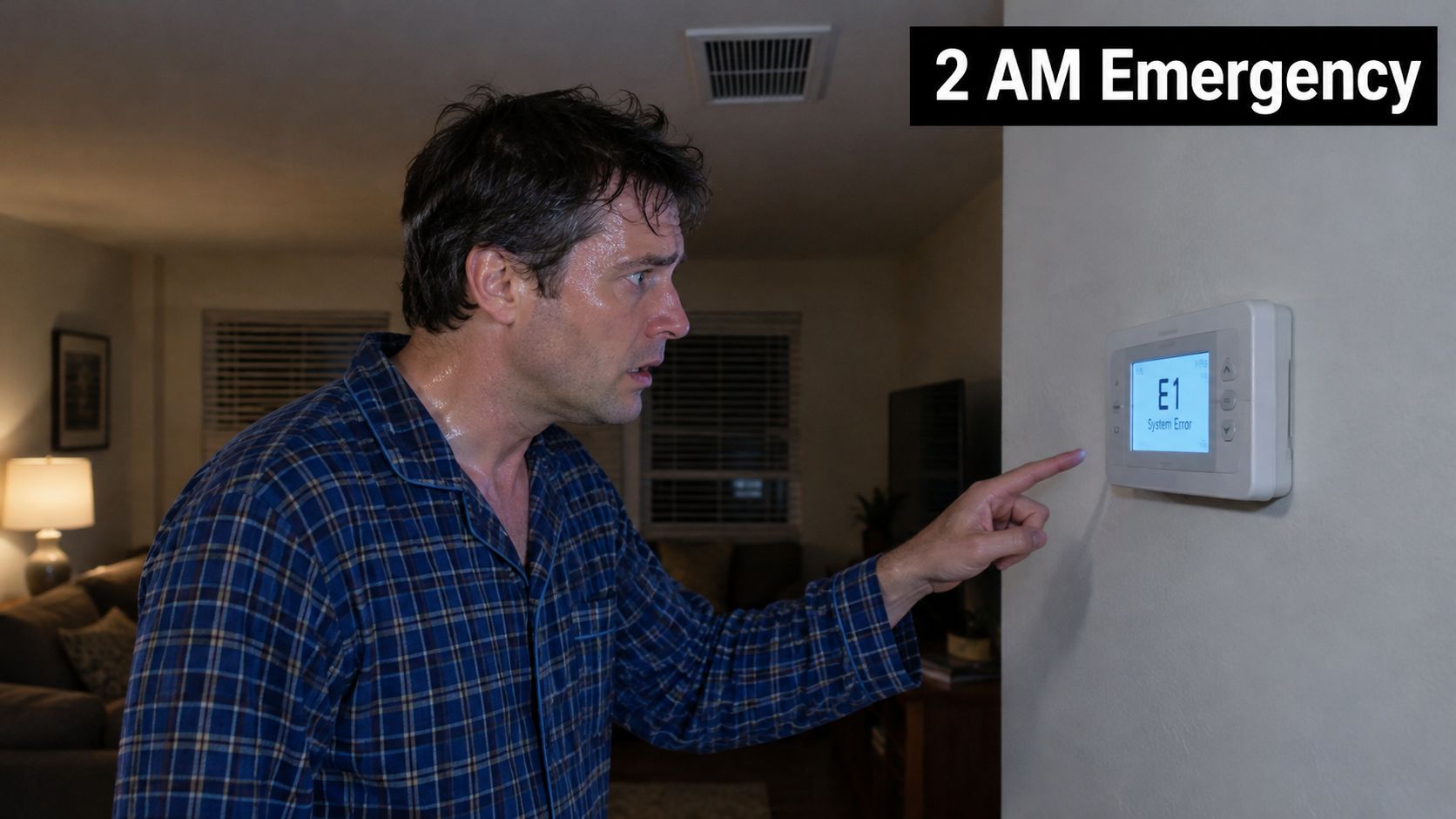
That's where 24/7 HVAC service matters. It isn't only about sending a truck quickly. Good after-hours support means sorting a genuine danger from a repair that can wait, protecting the home while help is on the way, diagnosing refrigerant and electrical faults correctly, and giving seasonal residents or facility managers a clear plan when parts aren't immediately available.
Residential air conditioning is now a core household utility in the United States. According to the U.S. Energy Information Administration's household electricity overview, 88% of U.S. households used air conditioning in 2020, compared with 57% in 1980. Central air conditioning increased from 27% of homes in 1980 to 67% in 2020, and air conditioning represented 19% of residential site electricity consumption in 2020. In Tucson, that makes a failed cooling system more than an inconvenience.
You'll learn what round-the-clock service should include, why breakdowns often appear during heatwaves, how emergency triage works, and what to do during smoke or dust events. You'll also find practical guidance for Tucson homeowners, snowbirds, commercial property owners, and families waiting for a repair.
When Your AC Fails at Midnight in Tucson
A midnight failure usually starts with a small clue. The air from the vents feels warmer than usual. The system cycles off and doesn't restart. A drain pan begins filling, an electrical smell appears, or the thermostat flashes a code you don't recognize. By the time the indoor temperature becomes uncomfortable, the outdoor temperature may still be high enough to keep the home from cooling naturally.
The first decision is safety, not troubleshooting. Turn the system off if you smell burning, see smoke, hear unusual electrical buzzing, or notice water near electrical equipment. Don't open sealed panels, handle refrigerant lines, bypass a safety switch, or attempt combustion repairs. If a carbon monoxide alarm sounds, leave the building and contact emergency services before arranging HVAC work.
For a routine failure in a vacant home, next-day service may be reasonable. For a home occupied by someone vulnerable to heat, a business protecting temperature-sensitive inventory, or a building with worsening electrical or water risks, the priority changes. A dispatcher should ask about occupants, indoor conditions, the equipment type, error codes, unusual sounds, recent dust or smoke, and whether the system has stopped completely.
Practical rule: A 24/7 call should produce a safety decision and a response plan, not just an arrival estimate.
Round-the-clock coverage can also help seasonal residents. A snowbird may be in another state while a neighbor, property manager, or smart thermostat reports that cooling has failed. The service provider needs authorization, access instructions, gate details, and a way to document the condition before and after the visit. If parts are unavailable, the technician should explain whether temporary cooling, controlled shutdown, or another protective measure is appropriate.
For a useful explanation of after-hours decisions and warning signs, see this guide to air conditioning repair after hours. The central point is simple: fast arrival matters, but correct triage protects people and property first.
What 24/7 HVAC Service Really Covers
A real 24/7 HVAC program works more like urgent care than a simple answering service. The dispatcher gathers symptoms, identifies immediate hazards, assigns a priority, and connects the call with a qualified technician. The technician then diagnoses the system, explains the available repair, and separates a safe temporary measure from a complete fix.
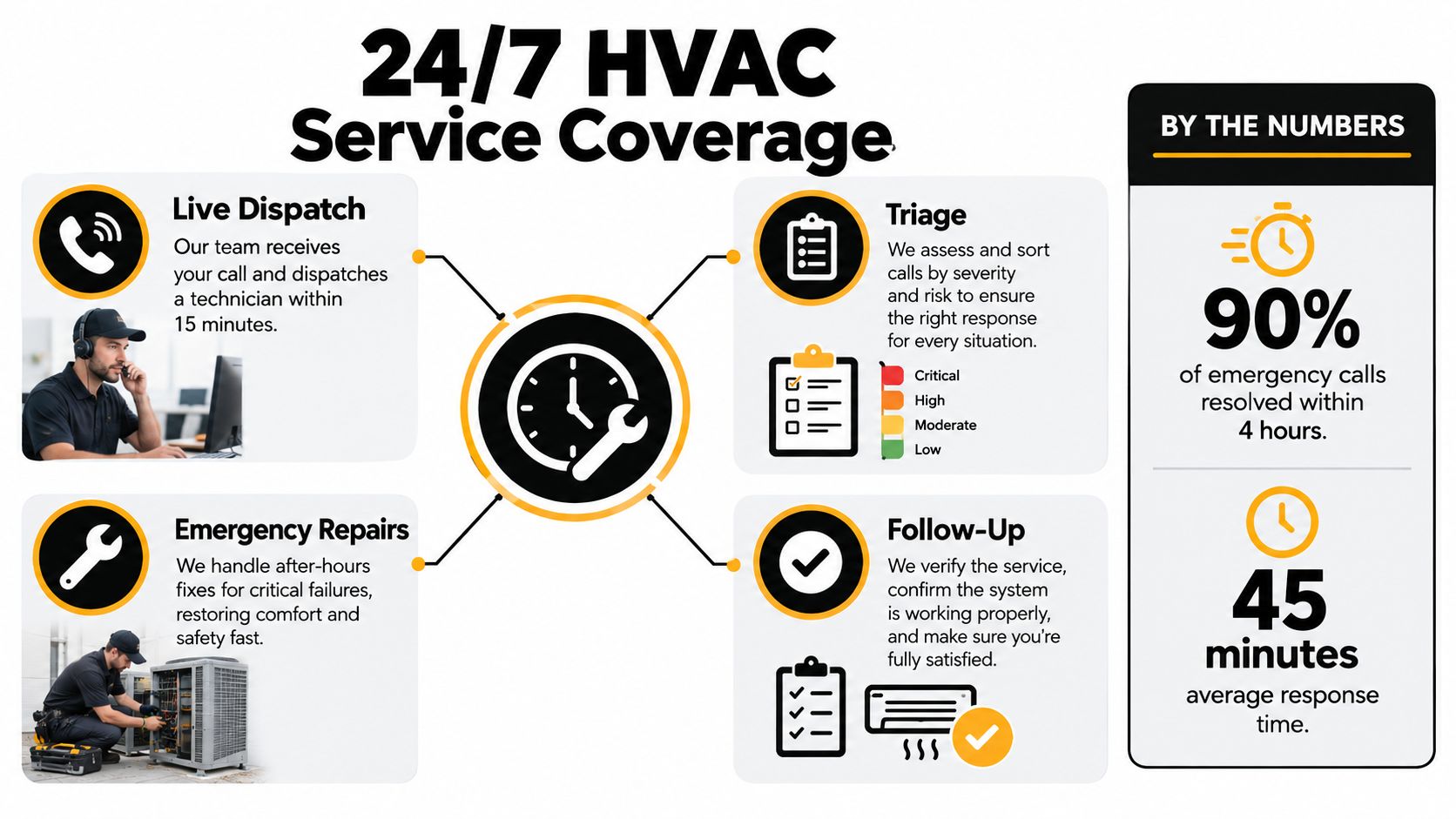
Dispatch should begin with useful questions
A good intake call covers:
The symptom: Is the system dead, blowing warm air, short cycling, leaking water, or showing an error?
The risk: Is there smoke, a burning odor, gas concern, standing water, exposed wiring, or an alarm?
The occupants: Are children, older adults, pets, or medically vulnerable people inside?
The equipment: Is it a central air conditioner, heat pump, furnace, rooftop unit, mini-split, or commercial system?
The access: Can the technician enter the property, and are there gates, pets, tenants, or building procedures to consider?
Not every uncomfortable room requires a midnight repair. A system that makes a mild noise but still cools may be suitable for a scheduled visit, provided there's no burning smell, leak, electrical concern, or rapidly worsening condition. No cooling during extreme heat, an active water leak, an electrical hazard, or unsafe combustion symptoms deserve faster attention.
The technician should solve the cause
After-hours technicians may restore operation, but that doesn't mean they should reset a breaker repeatedly or add a consumable part without checking why it failed. They should inspect airflow, electrical components, drains, coils, controls, and refrigerant conditions according to the equipment and symptom.
The technical workforce is substantial, yet coverage still depends on qualified people being available. Industry reporting based on U.S. Bureau of Labor Statistics data indicates that approximately 425,200 heating, air-conditioning, and refrigeration mechanics and installers were employed in the United States in 2024. The occupation is projected to grow 8% from 2024 through 2034, with roughly 40,100 workers needed each year to replace people who leave or retire. Those labor demands help explain why a provider needs dependable scheduling and technicians familiar with air conditioners, furnaces, heat pumps, refrigeration, controls, and ductwork.
Energy use also affects the stakes in hot regions. Southern households averaged 13,376 kilowatt-hours of electricity use in 2020, the highest regional household average, partly because of cooling and electric heating. Readers comparing operating considerations can also review this practical HighFlow Energy guide to aircon expenses for broader context about how equipment use affects household costs.
A written service agreement should define dispatch rules, priority access, maintenance coverage, exclusions, and after-hours pricing. Review the service agreement terms before an emergency so you aren't trying to interpret unfamiliar conditions while the house is heating up.
Why Breakdowns Strike on Nights Weekends and Heatwaves
HVAC equipment doesn't know it's Saturday night. It fails after hours because heavy demand exposes weaknesses that were already developing. In Tucson, an air conditioner may run for long periods during a hot spell. A restricted filter, dirty coil, weak capacitor, blocked drain, loose electrical connection, or low refrigerant charge can become a complete shutdown when the system has little time to rest.
The pattern often looks like this: airflow falls, the coil gets too cold, ice forms, and the unit loses capacity. Or the compressor works against abnormal conditions until a safety control stops it. A clogged condensate drain can trigger a float switch, while a failing electrical component may trip a breaker. Repeatedly resetting the equipment can turn a protective shutdown into a larger repair.
Early signs deserve attention
Watch for these changes:
Weak airflow: The blower runs, but little air reaches the rooms.
Short cycling: The system starts and stops before completing a normal cooling cycle.
New sounds: Grinding, buzzing, rattling, or hard starting can signal mechanical or electrical trouble.
Warm supply air: The fan operates, but the air no longer feels conditioned.
Water near the unit: A blocked drain, frozen coil, or condensate problem may be involved.
Rising utility use: Longer runtimes can indicate airflow, refrigerant, coil, duct, or control problems.
A filter is a simple place to look, but it isn't a complete diagnosis. The U.S. Department of Energy recommends cleaning or replacing air filters monthly during periods of peak use. It also reports that regular HVAC maintenance can reduce household heating and cooling costs by 10% or more while extending equipment life, as described in its home heating and cooling guidance.
Maintenance changes the failure pattern
A proper visit includes more than a quick glance at the outdoor cabinet. The technician can inspect the filter, measure airflow, evaluate coils and drains, test electrical components, check refrigerant conditions, and verify safe operation. These measurements help identify a gradual loss of capacity before it becomes a midnight call.
The useful mindset is to treat maintenance as reliability work. A clean filter doesn't correct a failing compressor, and a refrigerant adjustment doesn't repair a blocked drain. Each symptom points to a different diagnostic path, which is why replacing parts based only on appearance can leave the original fault in place.
How Emergency Response and Triage Work Hour by Hour
A calm call gives the technician better information and helps the dispatcher assign the right priority. Before calling, write down what happened, when the change began, what the thermostat shows, and whether anyone smells burning or hears unusual sounds. Take a photograph of an error code if you can do so safely, but don't remove panels to reach it.
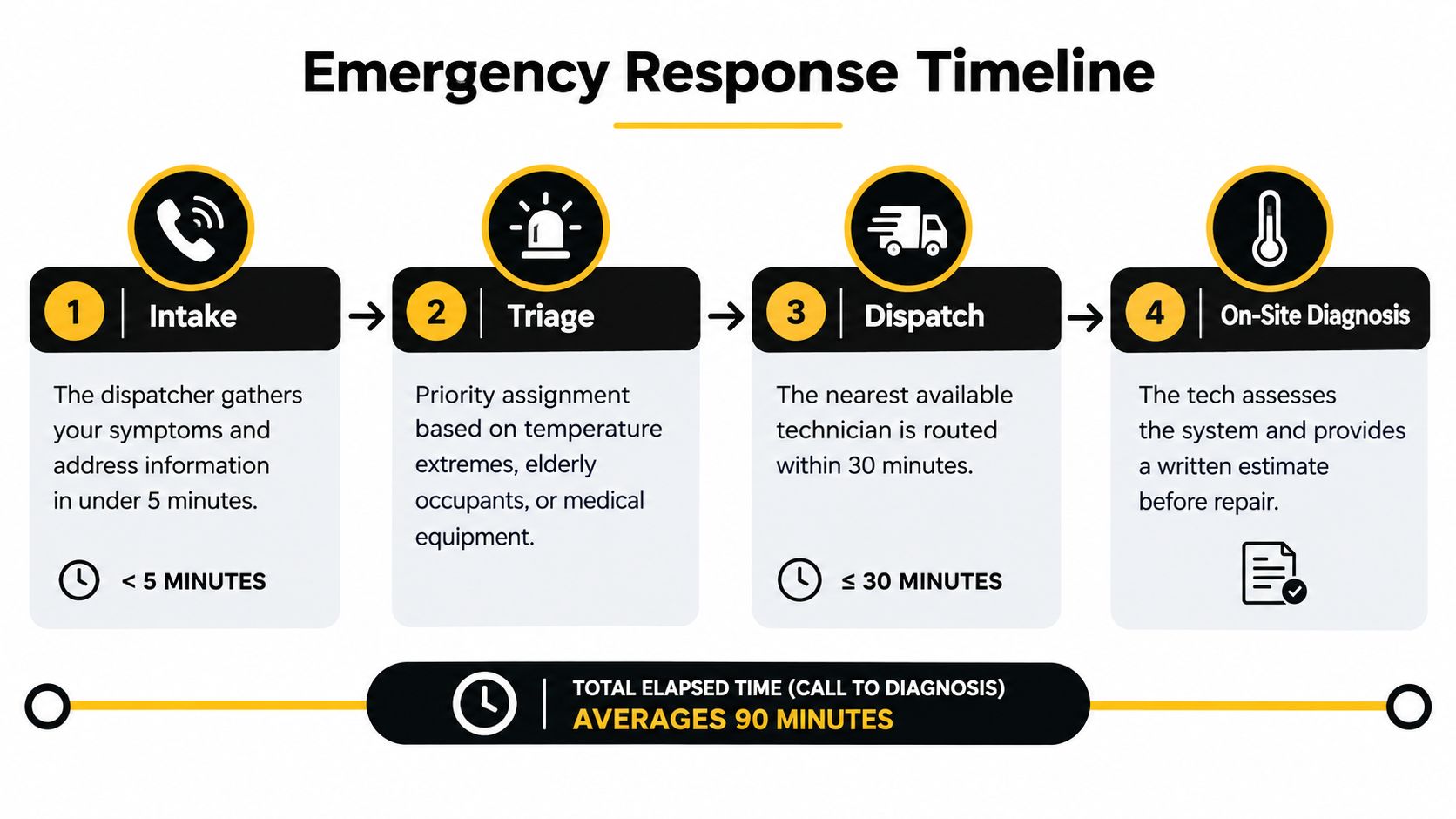
The intake call
Give the dispatcher the full address, best callback number, gate or access details, and information about pets or tenants. Explain whether the property is occupied, whether vulnerable people or temperature-sensitive equipment are present, and whether the failure affects one room, the entire building, or a commercial process.
Mention recent events that could matter, such as a dust storm, wildfire smoke, power interruption, water intrusion, or construction near the outdoor unit. Tell the dispatcher if the system is making a new sound, leaking, tripping a breaker, or producing a burning smell. Those details can change the response priority and help the technician bring appropriate tools.
While you wait
Move people and pets to the coolest safe area available. Close blinds, reduce heat-producing activities, and use safe temporary cooling if available. Don't operate a portable generator indoors or in an enclosed garage, and don't use an oven or outdoor appliance as a makeshift heating or cooling solution.
If there's smoke, sparking, a strong burning smell, gas concern, or active water near electrical components, shut the system down if you can do so without approaching danger. Leave the property and contact the appropriate emergency service when conditions require it. A technician shouldn't be the first response to an active fire, gas emergency, or carbon monoxide alarm.
On-site diagnosis
The technician should explain what failed, what testing supports that conclusion, and whether the recommended work is a complete repair or temporary stabilization. Ask whether the estimate includes labor, parts, after-hours charges, permits if relevant, and follow-up work. If a part must be ordered, ask how the technician will protect the equipment and occupants until the final repair.
Refrigerant deserves special care. The EPA's refrigerant leak-repair guidance advises homeowners to choose technicians with Section 608 certification for equipment containing regulated refrigerants. The agency recommends locating and repairing leaks instead of repeatedly “topping off” the system.
For commercial appliances containing at least 50 pounds of ozone-depleting refrigerant, EPA rules generally require repair within 30 days when the applicable leak-rate threshold is exceeded, or development of a retrofit or retirement plan within that period, followed by verification testing. A sound response documents pressures and temperatures, checks coils, joints, valves, and line sets, recovers refrigerant when required, repairs the source, evacuates the circuit, weighs in the specified charge, and verifies operation.
Use this emergency HVAC repair resource when preparing questions for a provider.
How to Evaluate Tucson Providers and Priority Plans
Choosing an HVAC provider during a breakdown is difficult if every company sounds the same. Look for evidence that the business can manage both urgent repairs and long-term system care. Licensing, bonding, insurance, technician credentials, written pricing, and clear guarantees matter more than a promise to arrive quickly.
Ask these questions before booking routine work or joining a priority plan:
Who answers after-hours calls, and what information do they collect?
How does the company prioritize homes with health, electrical, water, or business risks?
Are technicians certified to handle regulated refrigerants?
Will the technician provide measurements and a written estimate?
What happens if a required part isn't available?
Does the agreement cover residential and commercial equipment?
Are maintenance visits, discounts, priority response, and follow-up terms written clearly?
Which payment, financing, or special-rate options are available?
Evaluation criteria | Strong provider signs | Warning signs |
|---|---|---|
Credentials | Licensed, bonded, insured, and able to identify relevant technician certifications | Vague answers about qualifications or insurance |
Emergency intake | Live or dependable after-hours dispatch that asks about safety, occupants, access, and symptoms | A voicemail with no risk screening |
Pricing | Upfront explanation of diagnostic, labor, part, and after-hours charges | Pressure to approve work before the cause is explained |
Refrigerant work | Section 608-qualified technician who searches for leaks and verifies the repair | Repeated refrigerant additions without leak investigation |
Diagnosis | Recorded electrical, airflow, temperature, drain, or refrigerant findings where relevant | Parts recommendations based only on a visual glance |
Guarantees | Written workmanship and parts terms with understandable exclusions | Verbal promises that don't appear in the agreement |
Residential service | Experience with central AC, heat pumps, furnaces, ductwork, and controls | A narrow service list that doesn't match the home |
Commercial service | Familiarity with rooftop units, controls, filtration, access rules, and documentation | No plan for tenant coordination or facility records |
Maintenance plans | Defined visits, priority rules, discounts, and follow-up procedures | “Priority” language with no stated benefits |
Local reputation | Consistent reviews that mention communication, cleanliness, and completed repairs | Reviews focused on pressure, surprise charges, or missed appointments |
A maintenance plan can make sense for a Tucson home that sits empty for part of the year, especially when someone must monitor the property remotely. It can also help a facility manager coordinate inspections and keep records in one place. Covenant Aire Solutions offers 24/7 emergency HVAC service, maintenance plans with biannual checkups and priority service, flexible financing, and residential and commercial repairs across the Tucson area. Compare those terms with other local providers and select the arrangement that matches your access, budget, and equipment needs.
Protecting Indoor Air During Dust and Smoke Events
A cooling failure and an air-quality emergency can happen at the same time, but they require different decisions. A silent outdoor unit points toward a mechanical problem. Smoke odor, visible dust, rising particle readings, or irritation during a wildfire event may require filtration and ventilation changes even when the air conditioner still runs.
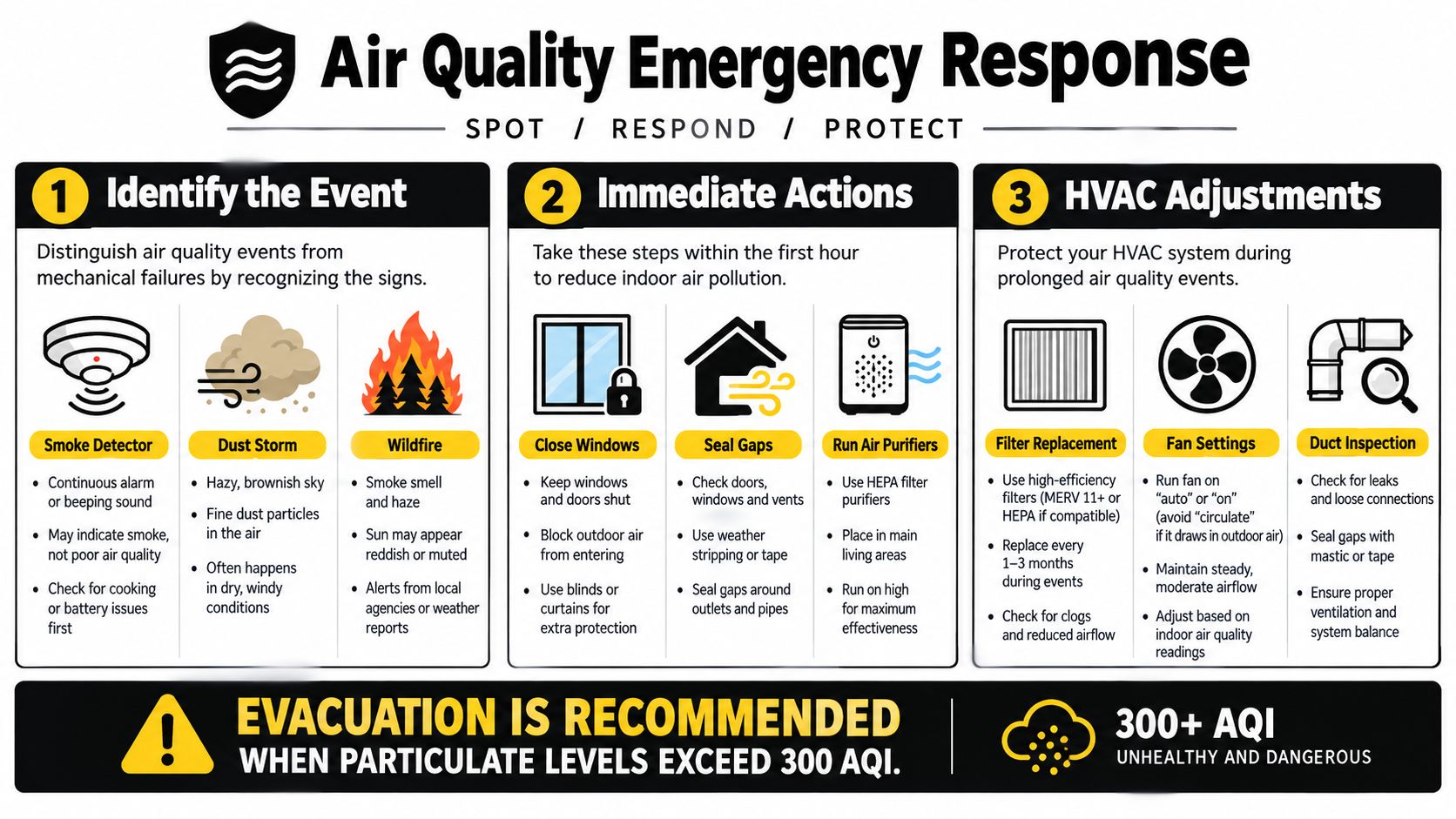
Wildfire smoke can enter buildings through outdoor-air systems, gaps, doors, and windows. Recent research reported that wildfire smoke infiltrated buildings at four to five times the rate of pollution from inversions or wind-driven dust events, with guideline exceedances occurring mainly in buildings using air-side economizers. A separate study found that the 2025 Eaton Fire increased indoor PM2.5 levels by 91% in affected Los Angeles households, while HEPA filtration was evaluated as a mitigation measure. These findings are summarized in research coverage of wildfire smoke infiltration.
More outdoor air isn't always better
Ventilation normally dilutes indoor pollutants, but bringing in smoky outdoor air can worsen conditions. During a smoke event, a technician or facility professional may need to evaluate whether an economizer should be disabled or adjusted, whether recirculation is appropriate, and whether the building can maintain safe airflow with improved filtration.
Don't make those changes blindly. A closed outdoor-air damper can create other indoor-air problems, while a dense filter can restrict airflow if the fan and filter slot aren't designed for it. The correct choice depends on pollutant type, building controls, filtration, pressure drop, and the health needs of occupants.
Smoke protocol: Limit pollutant entry, use compatible filtration, protect airflow, and verify indoor conditions instead of assuming that one fan setting solves every event.
Filtration needs both efficiency and airflow
The EPA explains that air-cleaner performance depends on two separate factors: the percentage of pollutants captured and the volume of air moving through the filter. It recommends using the highest-rated filter the system can accommodate. A MERV 13 or higher filter must demonstrate at least 50% removal efficiency for the smallest particles tested, but a higher rating isn't automatically better if the equipment can't maintain adequate airflow.
The EPA's indoor-air-quality guidance also notes that manufacturers commonly recommend changing filters every 60 to 90 days, while household conditions may require more frequent replacement. Smoke, dust, pets, renovation debris, and heavy occupancy can load a filter sooner.
For commercial spaces, ASHRAE recommends MERV 13 or the highest compatible rating for recirculated air, with sealed filter edges to reduce bypass. The ASHRAE commercial HVAC guidance emphasizes that the system must overcome added pressure drop and maintain acceptable airflow.
Families should keep windows and doors closed during severe outdoor pollution, use a properly sized portable purifier where available, and follow public health guidance if indoor conditions become unsafe. Facility managers should document filter changes, damper positions, pressure effects, and indoor readings. The indoor-air-quality and ventilation guide can help organize those questions before calling for service.
Stay Comfortable Long After the Emergency Visit
An emergency repair should end with more than a running thermostat. Ask the technician to record the cause, measurements taken, parts replaced, refrigerant work, warranty terms, and any remaining recommendations. That record helps the next technician understand the system and gives a snowbird, landlord, or facility manager something concrete to review remotely.
Preventive care should match the building. ASHRAE guidance recommends commercial HVAC and indoor-air-quality walk-through inspections every 30 days, with attention to clogged filters, blocked condensate drains, biological growth on coils, humidity changes, and occupant complaints. Quarterly tasks add checks of filtration performance, air-cleaning equipment, dampers, and building-automation sensors, as described in the ASHRAE ventilation and maintenance guidance.
For a Tucson home, the schedule may be simpler, but the principles are the same. Before periods of heavy cooling, inspect filters, drains, blowers, electrical components, airflow, coils, and refrigerant conditions. Record measurements instead of relying only on appearance. For a vacant seasonal home, arrange access, confirm thermostat monitoring, identify a local contact, and decide who can approve repairs before you leave town.
Filter fit matters as much as filter rating. Excessive resistance or air bypass can reduce delivered airflow, increase fan energy, impair coil heat transfer, and raise the likelihood of freeze-ups or compressor stress. A technician should confirm that the filter, cabinet, fan, and duct system work together.
A practical HVAC preventive maintenance plan should include documented visits, clear follow-up responsibilities, seasonal capacity checks, and a way to request priority service. Save the provider's number before the next heatwave, review the plan while the equipment is operating normally, and don't wait for a midnight failure to discover that access or approval details are missing.
Covenant Aire Solutions provides 24/7 emergency HVAC repairs, preventive maintenance, heating and cooling service, and indoor-air-quality support for Tucson homes and businesses. Visit Covenant Aire Solutions to arrange service, review maintenance options, and prepare your property for the next heat, dust, or smoke event.