
7 Surprising Benefits of Humidifier During Winter for Your Health and Home
As winter temperatures drop, especially in arid climates like Tucson, we turn up our furnaces for warmth. While this keeps us cozy, it also strips the air of essential moisture, creating an environment that can feel drier than the Sahara Desert right inside our homes and commercial properties. This invisible problem leads to a surprising range of issues, from irritated skin and scratchy throats to actual damage to your home’s structure and interior finishes. Managing indoor air is not just about temperature; it is a critical component of a healthy living and working space.
This guide explores seven crucial benefits of humidifier during winter, explaining how restoring proper humidity levels can safeguard your health, comfort, and even your property. We will provide actionable insights and practical steps to transform your dry winter sanctuary into a healthy, comfortable haven. You will learn precisely why managing indoor humidity is a non-negotiable part of winter wellness for everyone, from homeowners and facility managers to our seasonal residents. From protecting hardwood floors to boosting your immune system during cold season, we will cover the practical advantages that make a humidifier an essential winter appliance.
1. Prevents Dry Skin and Respiratory Irritation
Winter heating systems are essential for comfort, but they significantly decrease indoor humidity. As your furnace warms the air, it strips away moisture, causing indoor humidity levels to plummet, often falling well below the optimal 30%. This excessively dry air acts like a sponge, pulling moisture from every available source, including your skin and respiratory system. The result is a host of uncomfortable and unhealthy symptoms: itchy, flaky skin, chapped lips, and dry, irritated nasal passages. For residents in naturally arid climates like Tucson, Arizona, winter heating only intensifies the problem, making proactive humidity control crucial.
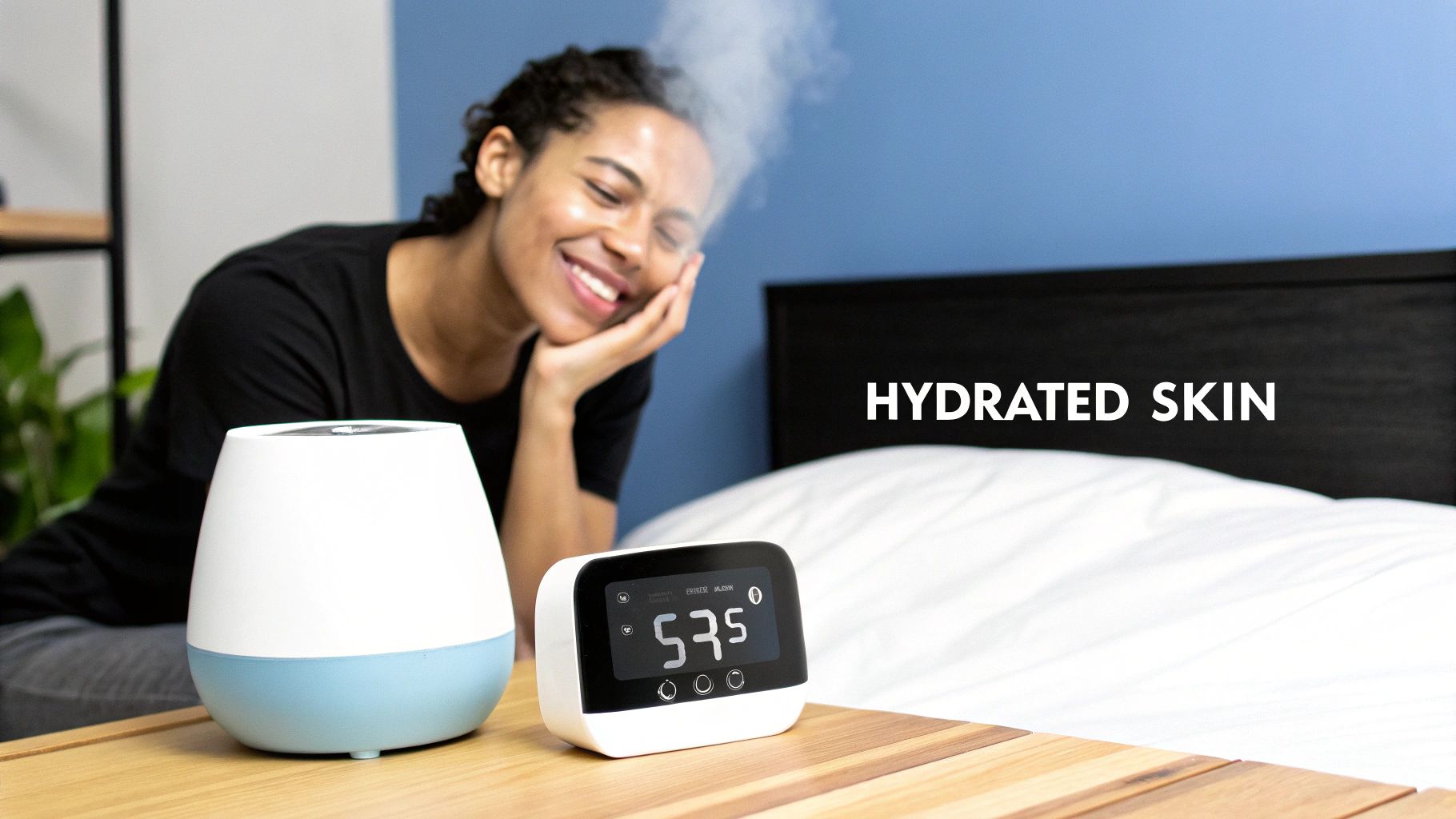
One of the most immediate benefits of a humidifier during winter is its ability to counteract this effect. By reintroducing water vapor into the air, a humidifier restores the indoor environment to a healthy humidity level, ideally between 30% and 50%. This balanced environment allows your skin to retain its natural moisture, reducing dryness and irritation. Your respiratory tissues also benefit immensely; properly hydrated sinuses and nasal passages can effectively trap and expel viruses and bacteria, bolstering your body's first line of defense against winter illnesses like colds and the flu. If you're consistently waking up with a scratchy throat or stuffy nose, it may be time to investigate the signs your air is too dry.
Practical Tips for Optimal Humidity
To maximize the benefits and avoid potential issues like mold growth, follow these actionable tips:
Monitor and Maintain: Use a hygrometer to track indoor humidity and aim for the 30-50% range. This prevents the air from becoming either too dry or too damp.
Choose the Right System: For consistent, low-maintenance coverage throughout your home, consider a whole-home humidifier integrated with your furnace. Covenant Aire Solutions often recommends these systems during routine HVAC tune-ups for seamless operation.
Use Pure Water: When using portable units, fill them with distilled or demineralized water. This prevents the dispersal of fine white mineral dust into your air.
Ensure Proper Ventilation: Even with a humidifier, good ventilation is key. It prevents condensation buildup on windows and other surfaces, especially in well-sealed homes.
2. Reduces Static Electricity Buildup
The dry winter air that plagues skin and sinuses also creates an ideal environment for static electricity. When indoor humidity drops below 30%, the air loses its natural conductivity, allowing static charges to build up on surfaces and people. This results in those familiar, unpleasant shocks when you touch a doorknob, clingy clothes that stick uncomfortably, and even "flyaway" hair. More critically, uncontrolled static discharge can pose a significant threat to sensitive electronic equipment, from home office computers to sophisticated commercial machinery.
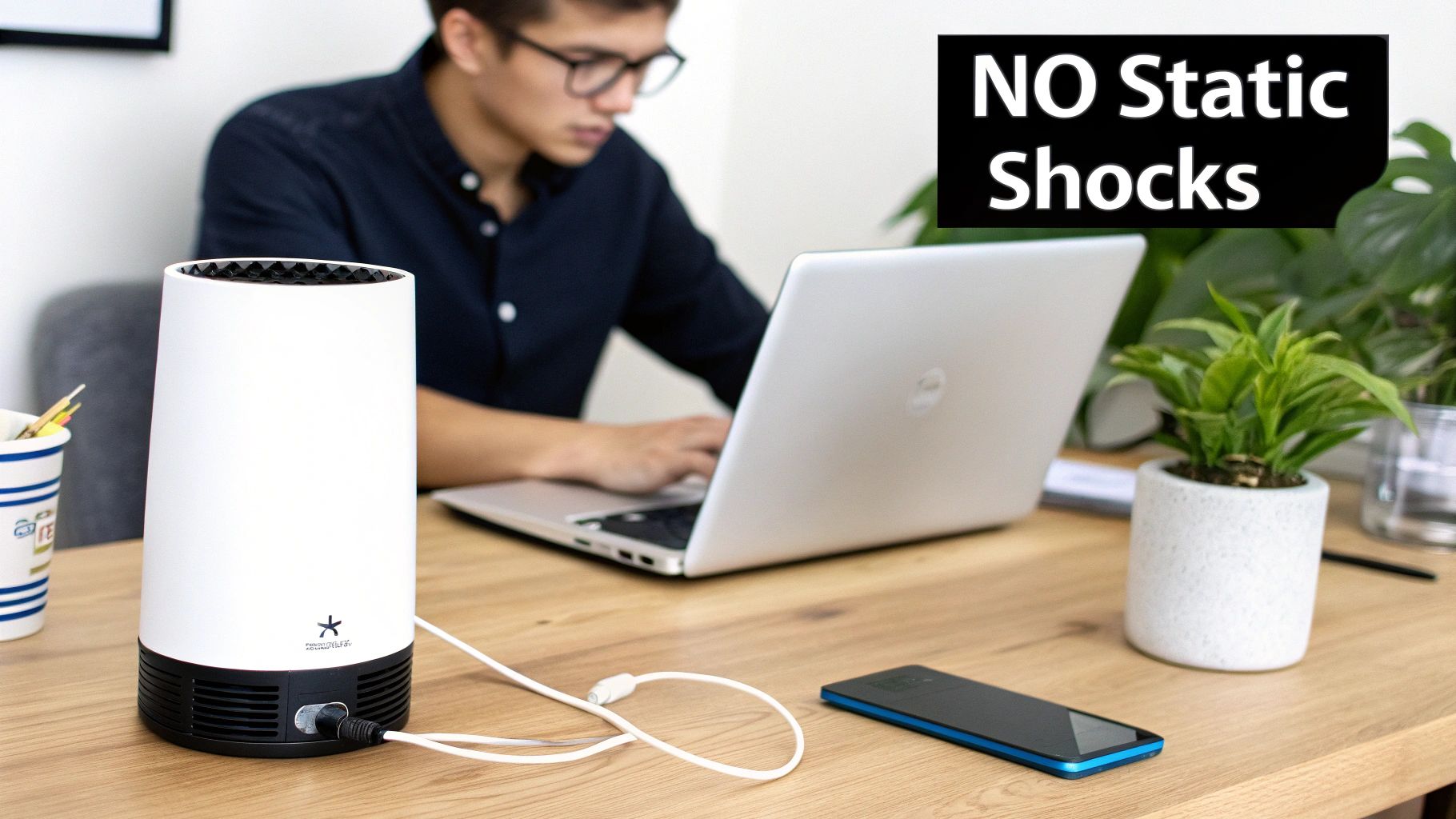
A key benefit of a humidifier during winter is its power to effectively neutralize this static buildup. By maintaining an indoor humidity level between 30% and 50%, the air contains enough moisture to conduct static charges away before they accumulate to problematic levels. This simple adjustment protects valuable assets. For example, tech companies and medical facilities in the Phoenix area rely on precise humidity control to prevent equipment failures and protect sensitive diagnostic tools. At home, it safeguards your personal computers, gaming consoles, and other expensive electronics from potentially irreversible damage caused by an unseen static zap.
Practical Tips for Static Reduction
To harness humidity for static control and protect your investments, apply these focused strategies:
Target the Right Level: For areas with sensitive electronics like server rooms or home offices, aim for a humidity level between 40% and 50%. This range offers optimal protection against static discharge.
Prioritize Consistent Coverage: While portable units can help in a single room, a whole-home humidifier integrated with your HVAC system provides the most consistent and reliable protection for all equipment throughout your property.
Combine with Grounding: Proper humidity control works best in tandem with other safety measures. Ensure all valuable electronic equipment is connected to properly grounded outlets.
Monitor Critical Zones: Use dedicated hygrometers in rooms with high-value electronics to ensure humidity levels remain consistently within the safe zone. This is a common practice recommended by manufacturers like Intel for data centers.
3. Protects Hardwood Floors and Wood Furniture
The dry, heated air of winter doesn't just affect your body; it also poses a significant threat to your home's wooden elements. Wood is a hygroscopic material, meaning it naturally absorbs and releases moisture to stay in equilibrium with its environment. When your furnace runs, it drastically lowers indoor humidity, forcing the wood in your floors, furniture, and even musical instruments to release its internal moisture. This process causes the wood to shrink, leading to visible gaps between floorboards, cracking in antique furniture, and potential warping that can cause permanent damage.
A key benefit of a humidifier during winter is its role as a guardian for these valuable investments. By maintaining a stable indoor humidity level between 30% and 50%, a humidifier prevents the extreme moisture loss that damages wood. For homeowners in Tucson with high-end hardwood installations or antique collectors preserving valuable pieces, this stable environment is crucial for preventing costly repairs and preserving the structural integrity and beauty of their belongings. This same principle applies to delicate items like pianos and guitars, which can lose their tone or even crack in excessively dry conditions. This proactive measure is a core part of any robust seasonal home maintenance checklist.
Practical Tips for Wood Protection
To effectively protect your home's wood elements, consistency is key. Follow these specific recommendations:
Target the Ideal Range: While 30-50% is a good general range, the National Wood Flooring Association often recommends a tighter range of 35-45% specifically for wood protection. Use a hygrometer to monitor levels closely.
Integrate for Consistency: A whole-home humidifier tied into your HVAC system offers the most stable and effortless solution. It maintains a consistent humidity level throughout your entire home, protecting everything from the floors to the furniture in every room.
Look for Warning Signs: During winter, periodically inspect your hardwood floors for signs of shrinkage, such as new or widening gaps between the planks. This is a clear indicator that your air is too dry.
Avoid Drastic Changes: Prevent sudden humidity fluctuations of more than 5% in a short period. Gradual adjustments are much safer for wood than rapid swings from dry to damp.
Seek Professional Advice: While maintaining optimal humidity levels is crucial, a comprehensive approach to home care also involves understanding general strategies on how to protect hardwood floors from daily wear and tear.
4. Alleviates Asthma and Allergy Symptoms
The dry air produced by winter heating systems can significantly worsen asthma and allergy symptoms. As the air loses moisture, it dries out your mucous membranes, making your airways more sensitive and reactive to common indoor irritants like dust, pet dander, and chemical fumes. This irritation can trigger inflammation, leading to more frequent or severe asthma attacks and allergic reactions. For Tucson residents, where the desert climate already presents respiratory challenges, maintaining optimal indoor humidity is a critical component of managing chronic conditions.
One of the most impactful benefits of a humidifier during winter is its ability to create a healthier breathing environment for those with respiratory sensitivities. By maintaining indoor humidity levels between 30% and 50%, a humidifier keeps your nasal passages and airways moist. This hydration helps soothe irritated tissues and can reduce the inflammation that triggers symptoms. Furthermore, moderately humid air helps discourage the proliferation of dust mites, which thrive in both extremely dry and overly damp conditions. For Tucson families with asthmatic children or seasonal residents managing respiratory issues, this balanced humidity can lead to fewer symptom flare-ups and better overall health during the winter months.
Practical Tips for Optimal Humidity
To effectively manage asthma and allergy symptoms with a humidifier, precision and cleanliness are key. Follow these actionable tips:
Target the Right Level: Aim for a humidity level between 40% and 50%. The Asthma and Allergy Foundation of America (AAFA) notes this range is ideal for keeping airways moist without encouraging mold or dust mite growth.
Combine with Air Purification: A humidifier adds moisture, but it doesn’t remove airborne particles. For comprehensive relief, pair your humidifier with a high-efficiency air purifier. To explore how these systems work together, you can find more information in our guide to HVAC indoor air quality.
Monitor Diligently: Use a hygrometer to continuously monitor indoor humidity. This simple tool helps you prevent levels from dropping too low or, just as importantly, climbing too high and creating an environment for mold.
Prioritize Cleanliness: Clean your humidifier and change HVAC filters regularly, ideally once a month during peak heating season. A dirty humidifier can disperse bacteria or mold spores into the air, undermining its health benefits.
5. Improves Sleep Quality and Reduces Snoring
Dry winter air is a common culprit behind restless nights and disruptive snoring. When you breathe in arid air, it irritates and dries out the sensitive tissues in your nasal passages and throat. This can lead to inflammation and congestion, narrowing your airways and causing the vibrations that produce snoring. For many residents in Tucson, where the air is already dry, winter heating exacerbates these issues, often resulting in poor sleep quality, frequent awakenings, and daytime fatigue for both the snorer and their partner.
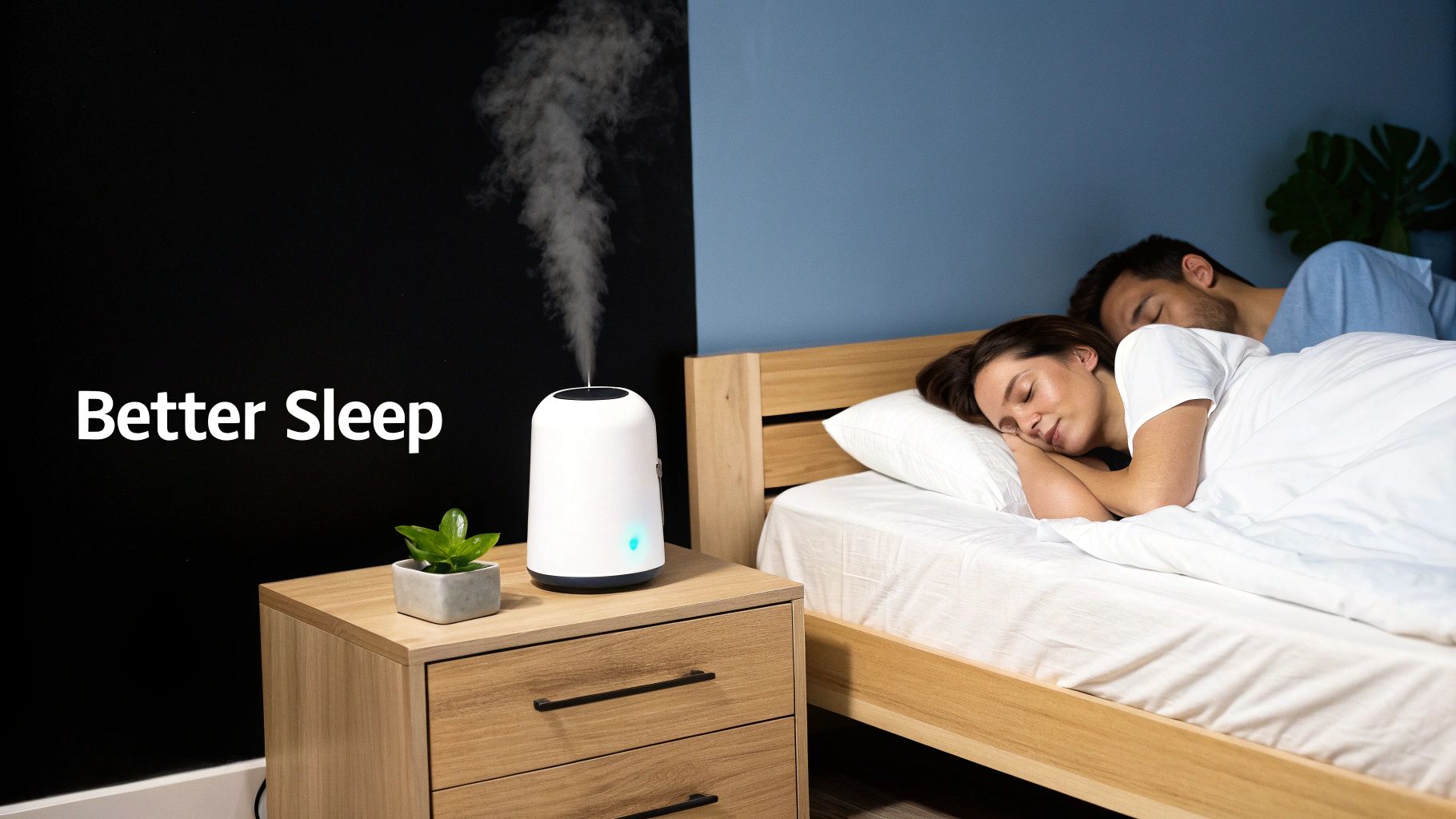
A significant benefit of a humidifier during winter is its proven ability to foster a better sleep environment. By maintaining optimal humidity levels, typically between 40% and 50% in the bedroom, a humidifier keeps your airways moist and comfortable. This prevents the irritation that leads to congestion and can significantly reduce the intensity and frequency of snoring. For individuals with seasonal allergies or sinus issues, the added moisture helps soothe inflamed tissues, making breathing easier throughout the night. A humidifier can also help reduce snoring by keeping nasal passages moist, which is crucial for overall sleep health and understanding how snoring affects your sleep. By creating the right conditions, you can achieve deeper, more restorative sleep and wake up feeling refreshed.
Practical Tips for Better Sleep
To turn your bedroom into a sanctuary for restful sleep, integrate a humidifier with these strategies:
Maintain Ideal Levels: Use a hygrometer to keep your bedroom's humidity between 40% and 50%. This range is optimal for respiratory comfort without creating excess moisture.
Choose a Quiet Model: Opt for an ultrasonic or evaporative humidifier, as they operate very quietly and won't disrupt your sleep.
Use Pure Water: Fill your unit with distilled or demineralized water to prevent the release of fine mineral dust into your bedroom air.
Clean Regularly: Clean your humidifier every few days according to the manufacturer's instructions. This prevents the growth of mold and bacteria that could harm your air quality.
Optimize Placement: Position the humidifier across the room from your bed to ensure even mist distribution rather than concentrating it in one area. For more tips on creating a comfortable home environment, learn about the ideal thermostat settings for big savings.
6. Protects Paint, Drywall, and Interior Finishes
The dry winter air that harms your skin and sinuses can be equally damaging to your home's interior. When indoor humidity drops below 30%, which is common when furnaces are running, the air starts to pull moisture from building materials. This process can cause paint to become brittle and peel, drywall seams to crack, and caulk to shrink and separate. For homeowners in Tucson, especially those in newer constructions or recently renovated spaces, the excessively dry desert air compounded by indoor heating can accelerate this damage.
One of the most valuable benefits of a humidifier during winter is its role in preserving your home's structural and aesthetic integrity. By maintaining a stable indoor humidity level, ideally between 30% and 50%, you protect these vulnerable materials from moisture loss. This stable environment prevents the cycle of expansion and contraction that leads to cracks in paint and splits in drywall. For historic homes in the Tucson area, maintaining proper humidity is essential for preserving original interior finishes. Similarly, commercial retail spaces rely on a professional appearance, and preventing visible damage to walls and trim is a key part of that upkeep.
Practical Tips for Protecting Your Home's Interior
To safeguard your paint, drywall, and other finishes, apply these targeted strategies:
Aim for Stability: Target a consistent humidity level between 35% and 45%. This range is optimal for protecting most interior building materials without risking excess moisture.
Install a Whole-Home System: For comprehensive and consistent protection, a whole-home humidifier integrated with your furnace is the most effective solution. It ensures every room receives balanced humidity.
Monitor Strategically: Place hygrometers in different areas of your home, including recently renovated spaces, to get an accurate picture of the overall humidity and identify any problem spots.
Schedule HVAC Maintenance: Ensure your humidifier is checked and functioning correctly during your annual furnace tune-up, so it’s ready to perform when the heating season begins.
7. Boosts Immune System Function During Cold and Flu Season
Winter is synonymous with cold and flu season, but it's the dry indoor air, not just the cold temperatures, that creates a perfect storm for illness. When your heating system runs, it significantly lowers indoor humidity, often dropping it below the crucial 30% threshold. This excessively dry air damages the delicate mucous membranes in your nasal passages and throat, which are your body's first line of defense against airborne pathogens. A compromised barrier makes it easier for viruses and bacteria to invade, weakening your natural immune response. This is especially relevant for Tucson households, where the combination of arid outdoor air and indoor heating creates an environment where viruses thrive.
A key benefit of a humidifier during winter is its ability to support your immune system by maintaining optimal humidity levels, ideally between 40% and 50% during peak illness season. Studies from Yale University and the CDC have shown that influenza and other viruses transmit less effectively in moderately humid air. Proper humidity keeps your respiratory membranes moist and functional, enhancing their ability to trap and expel pathogens through a process called mucociliary clearance. For families with young children, elderly members, or essential workers, maintaining this humidity level is a critical preventive health measure, helping everyone stay healthier and reduce the spread of illness.
Practical Tips for Optimal Immunity
To leverage your humidifier as a tool for immune support and create a healthier indoor environment, follow these actionable tips:
Target the Right Range: During cold and flu season (typically November through March), aim for a humidity level between 40% and 50%. Use a hygrometer to monitor levels in high-traffic areas like living rooms and bedrooms.
Combine with Air Purification: For maximum protection, pair your humidification system with advanced air purification. Combining a whole-home humidifier with technologies like HEPA filtration or a UV light in your HVAC system creates a powerful defense against airborne pathogens.
Prioritize Whole-Home Systems: A whole-home humidifier integrated with your furnace provides consistent and effortless humidity control throughout every room, ensuring all family members are protected.
Practice Proactive Maintenance: Schedule an HVAC tune-up before winter arrives. Ensure your system's filters are changed regularly, at least monthly during heavy use, to maintain both air quality and system efficiency.
7-Point Comparison of Winter Humidifier Benefits
Benefit | 🔄 Implementation Complexity | ⚡ Resource Requirements | 📊 Expected Outcomes ⭐ | Ideal Use Cases | 💡 Key Advantages / Tips |
|---|---|---|---|---|---|
Prevents Dry Skin and Respiratory Irritation | Medium, portable easy, whole‑home requires HVAC integration and installation | Electricity, water (distilled recommended), regular cleaning, hygrometer | Reduces skin dryness and respiratory irritation; fewer winter colds; ⭐⭐⭐⭐ | Homes in arid climates, families with children/elderly | Maintain 30–50% RH; monitor with hygrometer; schedule maintenance |
Reduces Static Electricity Buildup | Low–Medium, mainly humidity control; whole‑home more consistent | Electricity, water, monitoring; grounding and anti‑static accessories advised | Fewer static shocks and less equipment damage; protects electronics; ⭐⭐⭐⭐ | Home offices, server rooms, retail POS, medical facilities | Target 40–50% RH; use anti‑static mats and ensure proper grounding |
Protects Hardwood Floors and Wood Furniture | Medium, best with whole‑home humidifier and controlled installation | Regular monitoring, HVAC integration preferred, maintenance | Prevents shrinkage, gaps, cracking; preserves wood value; ⭐⭐⭐⭐ | Homes with hardwood, antiques, musical instruments | Aim 35–45% RH; avoid sudden humidity swings; monitor multiple rooms |
Alleviates Asthma and Allergy Symptoms | Medium, often combined with air filtration/purification for best results | Humidifier + HEPA/ActivePure options, regular cleaning, monitoring | Moisturizes airways and can reduce symptoms; not a medical substitute; ⭐⭐⭐⭐ | Asthma/allergy sufferers, schools, healthcare settings | Keep 40–50% RH; combine with filtration and consult clinicians |
Improves Sleep Quality and Reduces Snoring | Low, bedroom units simple; whole‑home optional | Quiet ultrasonic/evaporative unit, distilled water, cleaning | Reduces snoring and night awakenings for many users; improves sleep continuity; ⭐⭐⭐⭐ | Bedrooms, couples, seniors, seasonal congestion sufferers | Place across room, maintain 40–50% RH, clean 2–3× weekly |
Protects Paint, Drywall, and Interior Finishes | Medium, whole‑home preferred for uniform protection | Monitoring devices, HVAC integration, periodic maintenance | Prevents paint brittleness, drywall splitting and adhesive failure; ⭐⭐⭐⭐ | New or renovated homes, historic properties, commercial interiors | Target 35–45% RH; avoid >55% to prevent moisture damage; monitor before/after renovations |
Boosts Immune System Function During Cold and Flu Season | Medium, most effective with whole‑home humidification + purification | Humidifier, possible ActivePure/HEPA, strict maintenance and monitoring | Supports mucous membranes, may reduce viral transmission rates; complements other measures; ⭐⭐⭐⭐ | Schools, healthcare, multi‑generational homes, high‑contact workplaces | Maintain 40–50% RH (Nov–Mar); combine with filtration, vaccinations, and hygiene measures |
Take Control of Your Winter Comfort and Health
As we have explored, the winter air, particularly in dry climates like Arizona, poses a unique set of challenges to our health, comfort, and even our homes. The cold outside forces our heating systems to work overtime, a process that strips the indoor air of its essential moisture. This creates an environment where everything from our skin and sinuses to our wood furniture and immune systems can suffer. The solution, however, is both simple and profoundly effective: actively managing your home's humidity levels.
Recapping the Powerful Benefits of a Humidifier
Throughout this article, we've detailed the transformative impact of maintaining optimal indoor humidity. Let's revisit the key takeaways. We have seen how a humidifier:
Soothes Your Body: It alleviates the discomfort of dry skin, chapped lips, and irritated nasal passages.
Fortifies Your Health: It boosts your immune system's ability to fight off cold and flu viruses and can significantly reduce asthma and allergy triggers.
Enhances Your Home Environment: It protects your valuable hardwood floors, furniture, and interior finishes from cracking and warping.
Improves Your Daily Comfort: It dramatically reduces annoying static electricity shocks and even helps you achieve a deeper, more restorative sleep by minimizing snoring.
These are not minor conveniences; these are substantial improvements to your quality of life. The evidence clearly shows that the benefits of a humidifier during winter extend far beyond simple comfort, creating a healthier sanctuary for you and your family.
Your Next Step: From Knowledge to Action
Understanding these benefits is the first step, but taking action is what truly transforms your living space. While portable units offer a good starting point for a single room, a whole-home humidifier integrated with your HVAC system provides a far superior, "set it and forget it" solution. This approach ensures consistent, balanced humidity throughout your entire home without the constant need to refill water tanks or manage multiple devices. It is the most efficient and effective strategy for homeowners in Tucson and the surrounding areas to combat the pervasive dryness of the season.
Investing in proper humidity control is an investment in your well-being and the longevity of your home. You no longer need to accept dry, uncomfortable air as a non-negotiable part of winter. By taking control of your indoor climate, you are creating a healthier, more comfortable, and more resilient home environment.
Are you ready to experience the full benefits of perfectly balanced indoor air? The team at Covenant Aire Solutions specializes in integrating whole-home humidification systems with your existing HVAC setup. Contact us today for a professional consultation and let us design a custom solution that ensures your comfort and health all winter long.