
How Often Should I Service My Air Conditioner A Complete Guide
Updated: Dec 29, 2025
So, you're wondering how often you should service your air conditioner. The quick and easy answer you'll hear everywhere is at least once per year. But let's be real, here in Tucson, that's just the starting point.
Think of it like your car. You wouldn't stick to the same oil change schedule if you were a delivery driver versus someone who only drives on weekends. Your AC is no different. A system battling our relentless desert heat needs a lot more attention than one enjoying a mild coastal climate. Getting the service schedule right is the key to preventing surprise breakdowns, keeping energy bills in check, and getting the most life out of your unit.
To help you figure out what's right for your home, we put together this simple decision tree. It breaks down the ideal frequency based on the type of system you have.
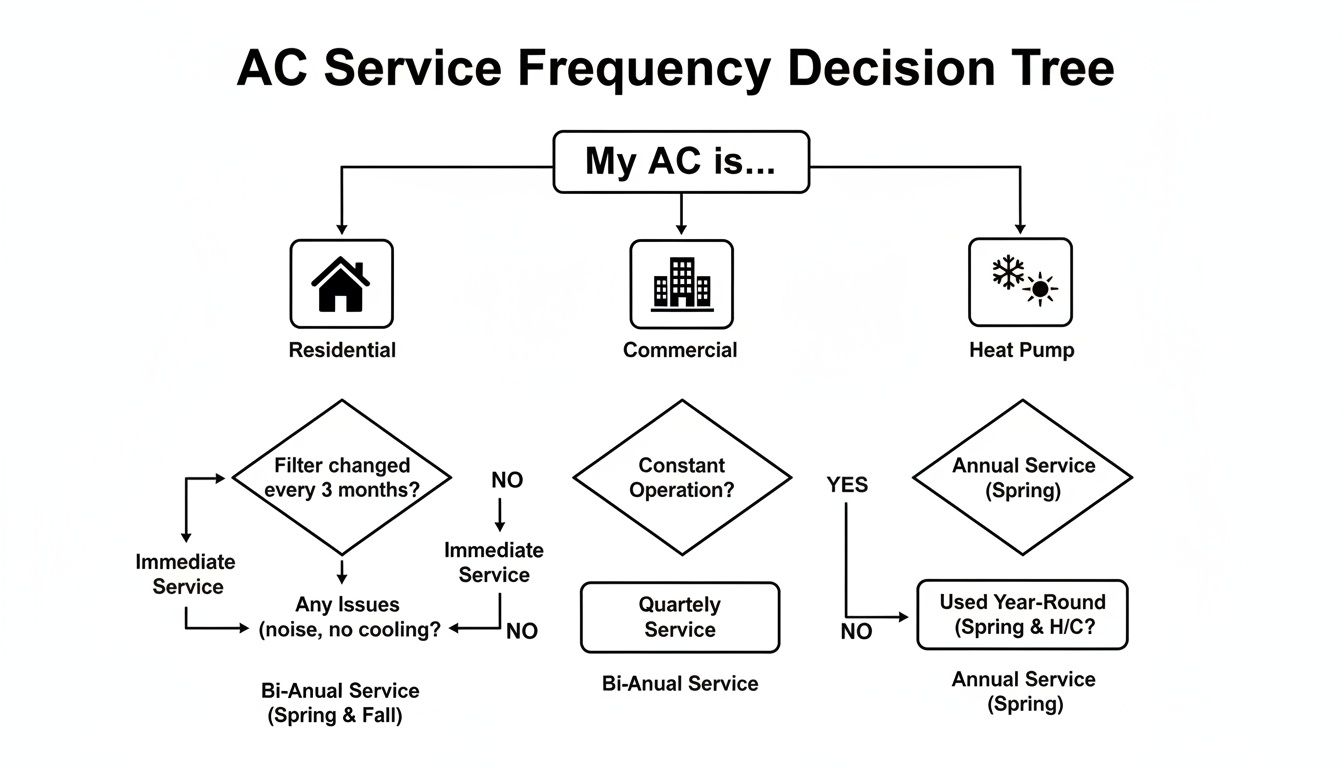
As you can see, a standard residential AC might be fine with an annual check-up. But for systems that pull double duty with heating, or for any commercial unit, bumping that up to twice a year becomes crucial.
Why Consistent Service Really Matters
Skipping regular maintenance is an easy mistake to make, but it has real consequences. A surprising number of people overlook it: only about 43% of American homeowners get their central air conditioners professionally serviced each year. In a hot climate like ours, that neglect gets expensive, fast.
Poor maintenance can jack up your energy use by 30% or more. On the flip side, units that get serviced annually tend to last roughly 40% longer. The numbers don't lie.
Here's a quick cheat sheet to help you remember the right schedule for your system.
Recommended AC Service Frequency At a Glance
This table gives you a fast, straightforward look at how often you should be scheduling professional maintenance based on your equipment and how hard it works.
System Type | Climate/Usage | Recommended Frequency |
|---|---|---|
Residential AC (Cooling Only) | Standard Climate, Seasonal Use | Annually (Spring) |
Residential AC (Cooling Only) | Hot Climate, Year-Round Use | Biannually (Spring & Fall) |
Heat Pump (Heating & Cooling) | Any Climate | Biannually (Spring & Fall) |
Commercial HVAC | Any Climate | Biannually or Quarterly |
For systems that handle both cooling and heating, like a heat pump, those twice-a-year service calls are non-negotiable. One visit in the spring preps it for summer, and another in the fall gets it ready for the cooler months. You can dive deeper into this with our guide on creating your essential HVAC maintenance schedule.
Skipping either one of those check-ups means you're heading into a demanding season with a system that hasn't been cleared for duty. It's a gamble that rarely pays off.
Why A Universal Schedule Does Not Exist
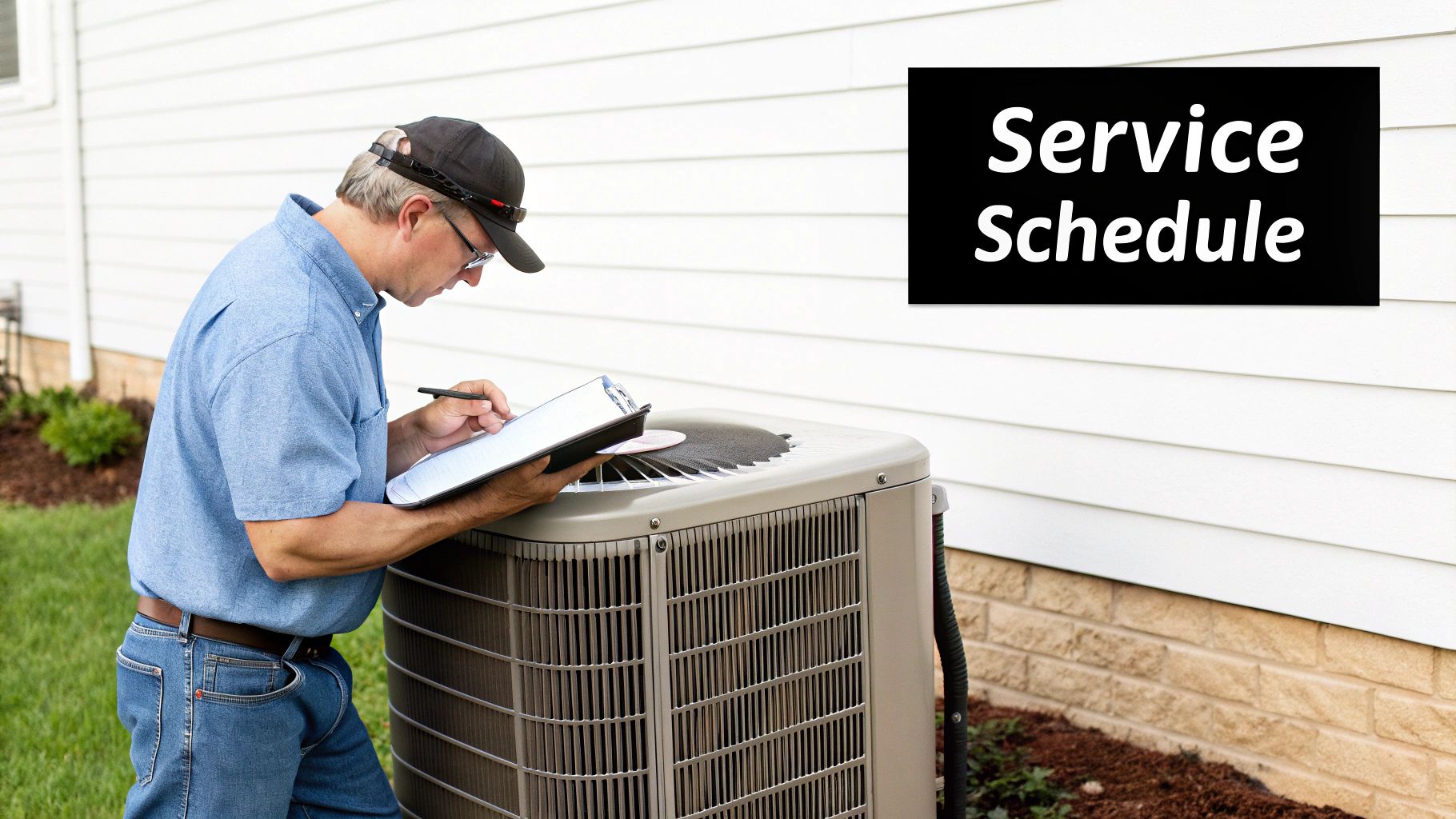
When it comes to AC maintenance, a "one-size-fits-all" schedule just doesn't cut it. Thinking every system needs the same care is like telling a marathon runner and a casual jogger to follow the exact same training plan. The jogger does just fine with a few runs a week, but the marathoner? They need a much more rigorous routine to perform at their peak.
Your air conditioner here in Tucson is that professional athlete, running at a full sprint from May through October. A unit in a milder climate is more like the casual jogger. Their maintenance needs are worlds apart, which is why a generic "once a year" rule simply isn't enough to protect your investment.
To figure out how often you should service your air conditioner, we need to look at what's really affecting its workload.
Your System's Age And Condition
The age of your AC unit is one of the biggest factors. A brand-new system, just like a new car, is in peak condition. It probably only needs a single annual tune-up to keep the warranty valid and make sure everything is running as it should.
But as a unit gets older, its parts start showing their age. Systems over 10 years old are far more likely to have issues with worn-out capacitors, failing fan motors, and small refrigerant leaks. For these senior systems, switching to a biannual service schedule is essential to catch these small problems before they turn into a complete breakdown on a 110-degree day.
An older AC unit needs more frequent check-ups not because it's faulty, but because proactive care is the best defense against the natural aging process. These visits help maintain efficiency and prevent the common failures that plague aging equipment.
The Intensity Of Local Usage
Nowhere is usage intensity more obvious than right here in Southern Arizona. Homeowners in cooler states might only use their AC for three or four months a year. In Tucson, our systems often run nonstop for half the year or even longer. That constant operation puts an incredible strain on every single component.
Think of it this way: a system that runs for 3,000 hours a year is going to need a lot more attention than one that only clocks 1,000 hours. All that extra runtime means dirt builds up faster on the coils, mechanical parts wear down sooner, and the risk of electrical issues goes way up. This is exactly why biannual maintenance has become the standard for our climate.
Your AC System Type
Finally, the kind of system you have plays a huge role. A standard air conditioner just handles cooling, which is a big enough job. But many homes now use heat pumps, which are responsible for both heating and cooling. These workhorses are easily the hardest-working appliances in your home.
Because they never really get a season off, heat pumps absolutely demand service twice a year.
A spring tune-up gets the system ready for the brutal summer cooling season.
A fall inspection makes sure it's prepared to provide reliable heat when the desert nights get chilly.
Different systems have different needs. If you're not sure what kind of equipment you have, you can learn more by checking out our guide to residential HVAC system types. Ignoring the dual-function workload of a heat pump is a recipe for an unexpected and uncomfortable failure.
What A Professional AC Tune-Up Actually Involves
Scheduling an AC service can feel like just another thing on the to-do list, but when you pull back the curtain on what a real tune-up involves, you see it’s not an abstract cost, it’s a tangible, high-value investment. This isn't just about swapping out a filter. It's a meticulous process designed to bring back lost efficiency, head off breakdowns, and ultimately add years to your system's life. Think of it like a comprehensive health physical for your air conditioner.
Every step a pro takes has a specific, critical purpose. They're not just glancing at parts; they're testing, cleaning, and calibrating them to make sure your unit is ready to battle another brutal Tucson summer. That level of detail is the difference between a system that just works and one that performs at its absolute peak.
Inspecting The Core Components
The first thing any good technician does is a deep dive into your system's heart, both inside and out. This is where a trained eye catches the small stuff that’s completely invisible to a homeowner but can turn into a big, expensive problem later.
Key inspection points include:
Cleaning Condenser and Evaporator Coils: These coils are the workhorses of heat exchange. Once they get caked in dust and grime, your AC has to fight tooth and nail to cool your home, sending your energy bills through the roof and putting serious strain on the whole system.
Checking Refrigerant Levels: Refrigerant is the lifeblood of your AC. If the levels are off, it’s a red flag for a leak and will cripple your cooling power. A technician measures the charge precisely to make sure it matches the manufacturer’s specs.
Inspecting Electrical Connections: Loose or corroded wires aren't just a common cause of sudden system failure; they're a serious fire hazard. Tightening and cleaning these connections is a non-negotiable step for both safety and reliability.
Lubrication And Cleaning For Longevity
After the main inspection, the focus shifts to the hands-on maintenance that keeps things running smoothly and prevents common headaches like water damage. These tasks are all about ensuring your system operates without a hitch through the hottest days of the year.
A technician will lubricate all moving parts, from fan motors to bearings, to cut down on the friction that wears components out prematurely. They'll also inspect and clear out the condensate drain line. A clog here is a recipe for disaster: it can cause water to back up, leading to major water damage, mold, and an automatic system shutdown. For a closer look at everything involved, check out our comprehensive 2025 air conditioner tune-up checklist.
A professional tune-up is a proactive strategy. By addressing minor wear and tear before it escalates, you are directly investing in your system's long-term health and avoiding the much higher costs of emergency repairs down the road.
Despite the clear upside, a surprising number of homeowners skip this essential service. Surveys show that just 30% of US homeowners schedule preventive HVAC maintenance. Yet, for those who do, the payoff is huge: predictive maintenance can slash breakdowns by a staggering 70-75% and cut downtime by 35-45%. You can learn more about these maintenance findings and see how a small investment delivers massive returns. Understanding how often you should service your air conditioner and what that service includes empowers you to make smarter, more cost-effective decisions for your home.
Warning Signs Your AC Needs Service Now
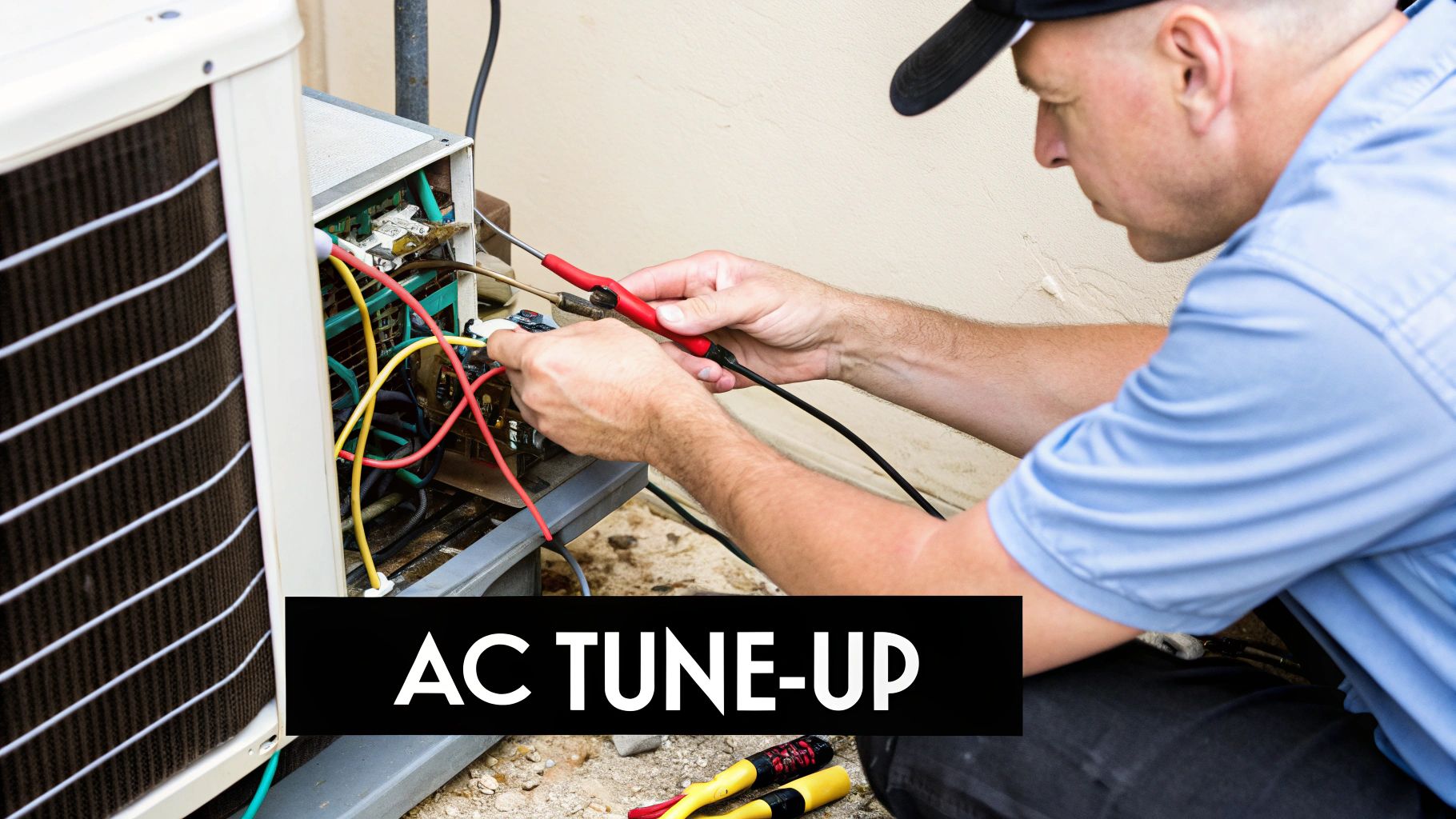
While regular tune-ups are the best defense against breakdowns, your air conditioner will often give you subtle (and not-so-subtle) hints that it needs professional help right now.
Ignoring these distress signals is a bit like driving your car with the check engine light flashing. You might get away with it for a little while, but a major failure is probably just around the corner. Learning to recognize these symptoms means you can get a technician out before a small fix turns into a costly emergency.
Unusual Sounds and Smells
Your senses are often the first line of defense. A healthy, happy AC unit should run with a consistent, low hum. When new and alarming noises pop up, it’s a clear red flag that something is wrong inside the machine.
Grinding or Squealing: These are mechanical cries for help. They often point to a failing motor bearing or a worn-out belt. Shut the system down immediately and call a pro, you could prevent a component from seizing up and causing a domino effect of damage.
Musty or Moldy Odors: That classic "dirty sock" smell is a tell-tale sign of mold or mildew growing on the evaporator coil or in the drain pan. This isn't just unpleasant; it's a direct threat to your home's indoor air quality.
Think of these sounds and smells as your AC’s early warning system. Catching them early is the key to heading off a much bigger problem.
Poor Performance and High Bills
Beyond strange sensory clues, your AC’s performance is a huge indicator of its health. If you feel a change in how it runs or see a sudden, painful spike in your energy costs, it's time to investigate. These are signs the system is working way too hard to cool your home.
For instance, weak airflow trickling from your vents could be caused by anything from a severely clogged filter to blocked ductwork or even a failing blower motor. Another critical symptom is frequent cycling, when the system kicks on and off in short, aggressive bursts. This can signal a refrigerant leak, an electrical issue, or an improperly sized unit.
An unexpected jump in your utility bill is often the most concrete evidence of a struggling air conditioner. When a system loses efficiency due to dirty coils or low refrigerant, it must run longer and harder to achieve the same temperature, directly increasing your energy consumption.
Sometimes, these warning signs don't just point to a needed repair; they can signal that your system is reaching the end of its useful life. You can learn more about making that call by reading our guide on the key signs to know when to replace your air conditioner. By understanding what your AC is trying to tell you, you can make a better decision about whether you need a simple service or a more serious evaluation.
The Real Financial Impact Of Skipping Maintenance

Let's be honest, it’s tempting to skip your annual AC tune-up. It feels like an easy way to save a few bucks. But from what we see out in the field every day, that little bit of savings now often spirals into much, much bigger expenses down the road.
Think of regular maintenance less as a cost and more as a powerful investment in your home’s efficiency and reliability. The financial argument for getting your system serviced is crystal clear: it’s all about stopping small, fixable issues from turning into budget-breaking emergencies.
When you let your system go without a professional check-up, you’re basically agreeing to pay more for less comfort. We see this play out in three ways: sky-high monthly bills, surprise repair costs, and having to replace the entire unit years too soon.
The Hidden Cost Of Inefficiency
A neglected air conditioner is an energy hog, plain and simple. As dust and debris clog up the coils and filters, your system has to fight harder and harder to cool your home. It’s like trying to run a marathon while breathing through a straw.
That extra effort requires a lot more electricity. This slow, sneaky decline in performance can easily inflate a unit's energy consumption by 30% or more. That’s a difference you will absolutely notice on your monthly utility bill.
Regular maintenance is your best defense against energy waste. A clean, well-tuned system operates at peak efficiency, ensuring you get the most cooling power for every dollar you spend and keeping your summer bills predictable.
That inefficiency adds up fast. Over a long Tucson summer, all that wasted energy can translate into hundreds of dollars flushed away, far more than the cost of a professional tune-up. You can also give your AC a helping hand by exploring your guide to solar window screens to reduce the heat load on your home in the first place.
Emergency Repairs And Premature Replacement
Beyond the energy waste, neglect is a direct line to more frequent and more expensive breakdowns. It's a fact: proper annual maintenance can lead to 5-20% in energy savings and extend an AC's life by up to 40%. Yet, only about 42% of homeowners actually schedule professional service.
This leaves the majority vulnerable to the 210% higher costs that come with reactive, emergency fixes. It's no surprise that this widespread neglect contributes to a nationwide repair bill topping $10 billion every year.
Ultimately, the biggest financial gamble you take by skipping service is having to replace your entire system years before you should. A new air conditioner is a major investment, and it's one you can put off for years with the right care. Understanding how often you should service your air conditioner is the first step in protecting that investment. For a detailed breakdown of what to expect for service expenses, check out our guide on how much HVAC maintenance costs.
Your Guide To AC Service And Maintenance
Even with all the details, you might still be wondering about the specifics of getting your air conditioner serviced. This section tackles the most common questions we hear from homeowners right here in Tucson.
Can I Service My AC Myself?
While changing your air filter every month is a fantastic DIY task we always encourage, a professional service goes much, much deeper. Our certified technicians have the specialized tools and training to safely handle complex electrical components and check refrigerant levels, which actually requires an EPA license.
A professional tune-up offers a level of safety and thoroughness you just can't get on your own. It’s all about addressing the internal mechanics that keep your system humming along efficiently when the summer heat is relentless.
When Is The Best Time Of Year For AC Maintenance?
The perfect time to service your air conditioner is in the spring, usually around March or April. This timing gets your system cleaned up and ready to go before the intense summer heat arrives, ensuring it operates at peak performance when you need it most.
If you have a heat pump that handles both cooling and heating, we strongly recommend a second service in the fall to prepare it for the cooler months. A bonus? Scheduling during these “shoulder seasons” often means you'll have more flexibility in picking an appointment time that works for you.
Scheduling maintenance in the spring is proactive care. It’s like a pre-season checkup for an athlete; you want to find and fix the small issues to prevent a major breakdown during the championship game. For your AC, that championship game is a 110-degree afternoon in July.
Does A Brand New Air Conditioner Need Service?
Yes, absolutely. Most manufacturer warranties explicitly require proof of regular annual maintenance to remain valid. Getting your new unit serviced during its first year not only ticks that box but also confirms it was installed correctly and is running as efficiently as possible right from the start.
Think of it as a small, essential investment to protect a very large one.
Don't leave your comfort to chance. At Covenant Aire Solutions, our biannual maintenance plans and 24/7 emergency support are designed to keep your system running perfectly year-round in Tucson. Schedule your service today by visiting covenantairesolutions.com.