
Air Conditioning System Cleaning: Quick DIY Steps for Better Efficiency
- Jan 7
- 16 min read
An effective air conditioning system cleaning is about so much more than just swapping out a filter. It's a comprehensive maintenance routine that paves the way for healthier air, lower energy bills, and a much longer life for your equipment. When done right, cleaning tackles the key components where grime loves to hide, like coils, drain lines, and the outdoor unit, clearing out the buildup of dust, allergens, and debris that drag down performance.
The Real Impact of a Clean AC System
Most people just think of their AC's job as making cold air, but its influence on your home's environment is far bigger than that. Beyond just controlling the temperature, a clean system is the foundation of a healthy, efficient, and affordable household, especially here in the demanding Arizona climate. Skipping this maintenance is like trying to run a marathon in worn-out, muddy shoes; you might finish the race, but it’s going to be a lot harder, slower, and cause unnecessary damage.
Picture this: a family in Tucson is suddenly dealing with a spike in summer allergies. They blame the pollen and dust from outside, never realizing their own AC unit is the real culprit, circulating a potent mix of allergens that have been trapped in a dirty filter and caked onto the evaporator coils. This is where a professional air conditioning system cleaning makes a direct impact, removing these contaminants right at the source.
Boost Your Indoor Air Quality
Think of your HVAC system as your home's lungs. It circulates the same air over and over, multiple times an hour. If its components are layered with dust, pet dander, mold, and other particles, it's just pushing those pollutants right back into your living space with every cycle. For anyone with asthma or allergies, this can be a serious problem.
A deep clean delivers immediate improvements by:
Removing trapped allergens like pollen, dust mites, and mold spores from the coils and filters.
Stopping microbial growth in the dark, damp corners of the drain pan and condensate line.
Eliminating musty odors that often come from bacteria or mold festering inside the unit.
Improve Energy Efficiency and Lower Bills
A dirty air conditioner has to work significantly harder to cool your home. All that grime built up on the evaporator and condenser coils acts like a layer of insulation, blocking the system's ability to transfer heat and forcing the compressor to run longer and harder. That extra strain shows up directly on your monthly utility bills.
A clean HVAC system doesn't just feel better; it performs better. Studies have shown that cleaning clogged components can lead to significant energy savings, with reductions in fan and blower energy use ranging from 41% to 60%.
Understanding these long-term benefits really highlights the critical role of regular property maintenance. It’s not just an expense; it's a smart investment in your property's value and your family's comfort.
The core advantages of keeping your AC system in top shape are clear and impactful. Here's a quick breakdown of how this routine maintenance translates into tangible benefits for your property.
At a Glance Benefits of Regular AC Cleaning
Benefit Category | Impact on Your Home or Business | Long Term Value |
|---|---|---|
Air Quality | Reduces airborne allergens, dust, and mold spores. | Creates a healthier indoor environment, especially for those with allergies or asthma. |
Energy Efficiency | Allows the system to cool with less effort and energy. | Lowers monthly utility bills and reduces your carbon footprint. |
System Longevity | Prevents strain on critical components like the compressor and fan motor. | Extends the functional lifespan of the unit, delaying costly replacement. |
Comfort | Ensures consistent and powerful cooling throughout your space. | Maintains a more comfortable and predictable indoor climate, especially during peak seasons. |
Cost Prevention | Avoids unexpected breakdowns from clogged lines or overworked parts. | Saves money on expensive emergency repairs and premature system failure. |
As you can see, the benefits go far beyond just having cool air. Proactive cleaning is a strategic move that pays dividends in health, savings, and peace of mind.
Extend Your System's Lifespan
Constant overexertion from fighting against dirt and debris leads to premature wear and tear on the most critical parts of your AC, like the fan motor and compressor. These also happen to be the most expensive components to fix or replace. A simple, consistent cleaning schedule can help you sidestep catastrophic failures and add years to the functional life of your unit.
This isn't just a local trend; homeowners everywhere are catching on. The global HVAC cleaning services market, currently valued around US$12.41 billion, is expected to climb to US$18.91 billion as more people realize just how important this service is. For even more ways to get the most out of your system, take a look at our guide to maximize your air conditioner efficiency with these AC tips.
Your AC Cleaning Toolkit: Getting Geared Up
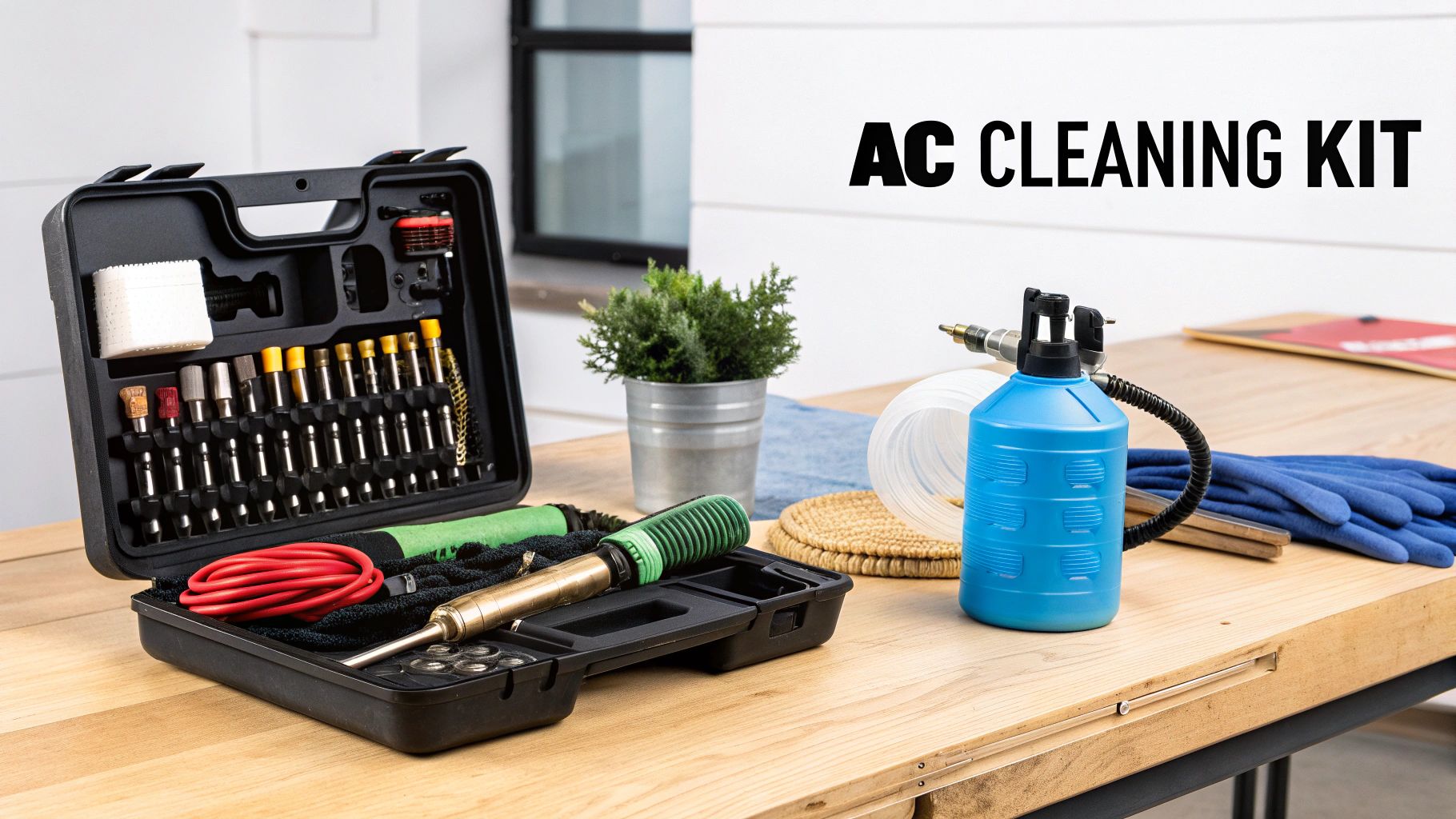
Before you even think about opening up your AC unit, let's talk about tools. Having the right supplies on hand is the difference between a job well done and a frustrating afternoon. It’s like trying to cook a great meal without prepping your ingredients first: it just doesn't work. Getting everything ready ahead of time means you can work smoothly and, most importantly, safely.
The absolute first thing you must do is kill the power. This isn't optional. Head to your breaker box and flip the breakers for both the indoor air handler and the outdoor condenser. For good measure, most outdoor units have a disconnect switch right next to them in a small metal box. Pull that out, too. Safety first, always.
Must-Have Safety Gear and Basic Tools
Personal protective equipment is non-negotiable here. At the very least, you need a solid pair of gloves to save your hands from sharp metal fins and cleaning chemicals. Grab some safety glasses, too, you don’t want dust and overspray anywhere near your eyes.
Once you’re geared up, these are the basics that will get you through most of the job:
Screwdriver Set: A multi-bit screwdriver is your best bet for getting into access panels without stripping the screws.
Shop Vacuum: A wet/dry vac with a soft brush attachment is a lifesaver for pulling loose gunk off the coils and clearing out the condensate line.
Soft Bristle Brush: You’ll need this to gently scrub grime off the evaporator coils. Those aluminum fins are delicate, so a soft touch is key.
New Air Filter: Have your replacement filter ready to go. Double-check the size on your old filter before you start. If allergies are a concern in your house, the right filter makes a huge difference. Our guide on the best HVAC filters for allergies can point you in the right direction for cleaner air.
Specialized Cleaning Supplies
Beyond the basics, a few specific products are made just for this job. They're designed to cut through the unique grime that builds up in an HVAC system without damaging any of the sensitive parts.
Pro Tip: Always grab a no-rinse, foaming coil cleaner made specifically for HVAC systems. This stuff is engineered to expand into the tiny gaps between the coil fins, breaking down dirt so it can be washed away by the system's own condensation.
Foaming Coil Cleaner: This is your go-to for the indoor evaporator coils. The aerosol can makes it easy to get even coverage.
Condensate Drain Line Tablets: Think of these as a preventative measure. After you've cleaned the drain pan, dropping one of these in helps stop future algae and sludge from building up.
Fin Comb: A handy little tool for straightening out bent fins on your outdoor unit. Damaged fins kill airflow and tank your efficiency, so gently combing them straight again can really boost performance.
With your safety gear on and these tools laid out, you're ready to tackle your AC cleaning with confidence.
Cleaning Your Indoor AC Unit Like a Pro
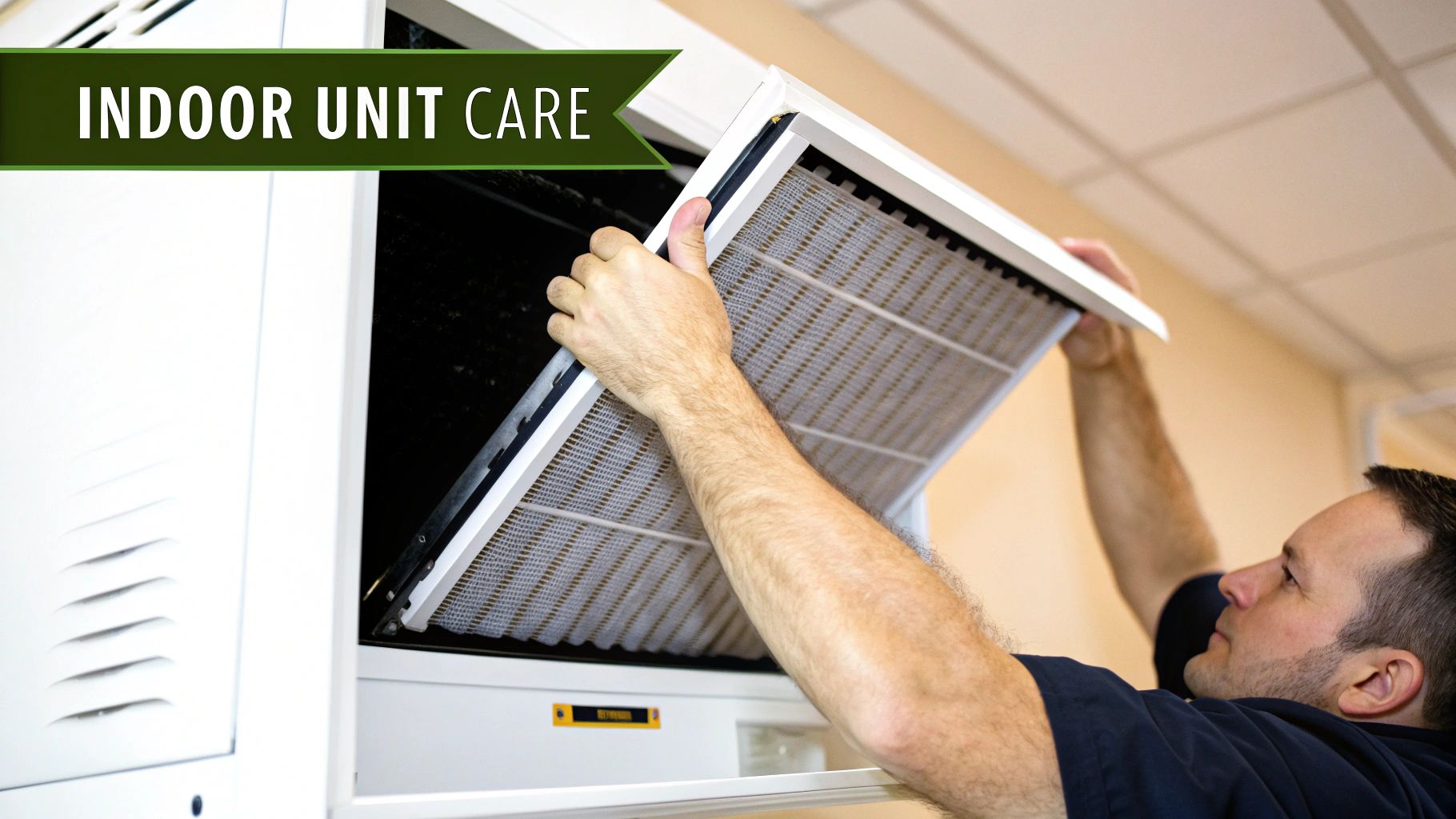
Alright, with your tools in hand, it's time to get to the heart of your home's cooling system: the indoor unit. This is where you'll make the biggest impact on your home's air quality and your system's efficiency. Don't feel intimidated; we'll break this air conditioning system cleaning down into a few clear, manageable tasks.
The indoor unit, which pros call the air handler, is what pulls in your home's warm air, chills it, and sends it back out. This whole process hinges on three key parts that need your attention: the air filter, the evaporator coils, and the condensate drain line. Each one has a job to do, and keeping them clean is non-negotiable for a healthy, efficient AC.
Handling the Air Filter
Think of your air filter as the bouncer for your HVAC system. It’s the first line of defense, trapping dust, pollen, and pet dander before they can get into the sensitive guts of your AC. Getting to it is usually a piece of cake; just look for a slot on the side, bottom, or top of your air handler.
Slide the old filter out, and you’ll see one of two kinds.
Disposable Filters: These are the most common and are made of paper or fiberglass. They're meant to be tossed and replaced, usually every 30-90 days, depending on things like pets, dust, and allergies in your home.
Washable Filters: You don't see these as often, but they're reusable. If you have one, you'll need to give it a good cleaning with a gentle stream of water. Make sure it's completely dry before you slide it back in.
A filter that's caked with grime chokes your system's airflow, forcing it to work way harder just to pull air through. That extra strain can lead to overheating and weak cooling power. It's a small task with a huge payoff.
Tackling the Evaporator Coils
Next up: the evaporator coils. These thin metal fins are where the real cooling magic happens. Refrigerant flowing through them absorbs heat from the air passing over. But because they're always damp from condensation, they're a magnet for dust and grime, which can build up into a thick, insulating blanket.
First, you'll need to remove any access panels to get a good look at them. You'll probably see a layer of fuzzy gray dust clinging to the fins. Grab your shop vacuum with the soft brush attachment and gently vacuum away all that loose gunk.
Be super careful here. Those aluminum fins are incredibly thin and can bend or get crushed with just a little too much pressure. A light touch is all you need. Damaging them could restrict airflow and land you with a professional repair bill.
After you've vacuumed, it’s time for the foaming coil cleaner. Spray it evenly across the entire coil surface, making sure it gets deep between the fins. You'll see the foam expand, literally pushing the dirt out from those tight spaces. As it works, the foam will turn back into a liquid and drip down into the condensate pan below, taking all the gunk with it. No rinsing needed.
Clearing the Condensate Drain Line
All that dirty water from the coils has to go somewhere, and that brings us to the final indoor job: clearing the condensate drain line. This little PVC pipe is supposed to carry moisture safely outside, but it can get clogged with nasty sludge, algae, and mold. A clog here will cause water to back up and overflow the drain pan, leading to serious water damage.
The easiest way to clear it is with your wet/dry vacuum. Find the spot where the drain line exits your house, it's usually a small pipe near your outdoor AC unit. Stick the vacuum hose over the end of the pipe, use your hand or a rag to create a tight seal, and let it run for a couple of minutes. The suction is usually powerful enough to pull out whatever gunk is causing the blockage.
This isn't just about good housekeeping; it’s a critical part of smart home maintenance. In fact, annual spending on HVAC repair and maintenance was projected to top 10 billion dollars, showing just how much homeowners value this kind of upkeep.
By focusing on these three areas, you've already made a huge improvement in your AC's performance. If you want to get even more granular, check out our homeowner's guide to cleaning AC unit components, which has extra tips and pictures.
How to Clean Your Outdoor Condenser Unit
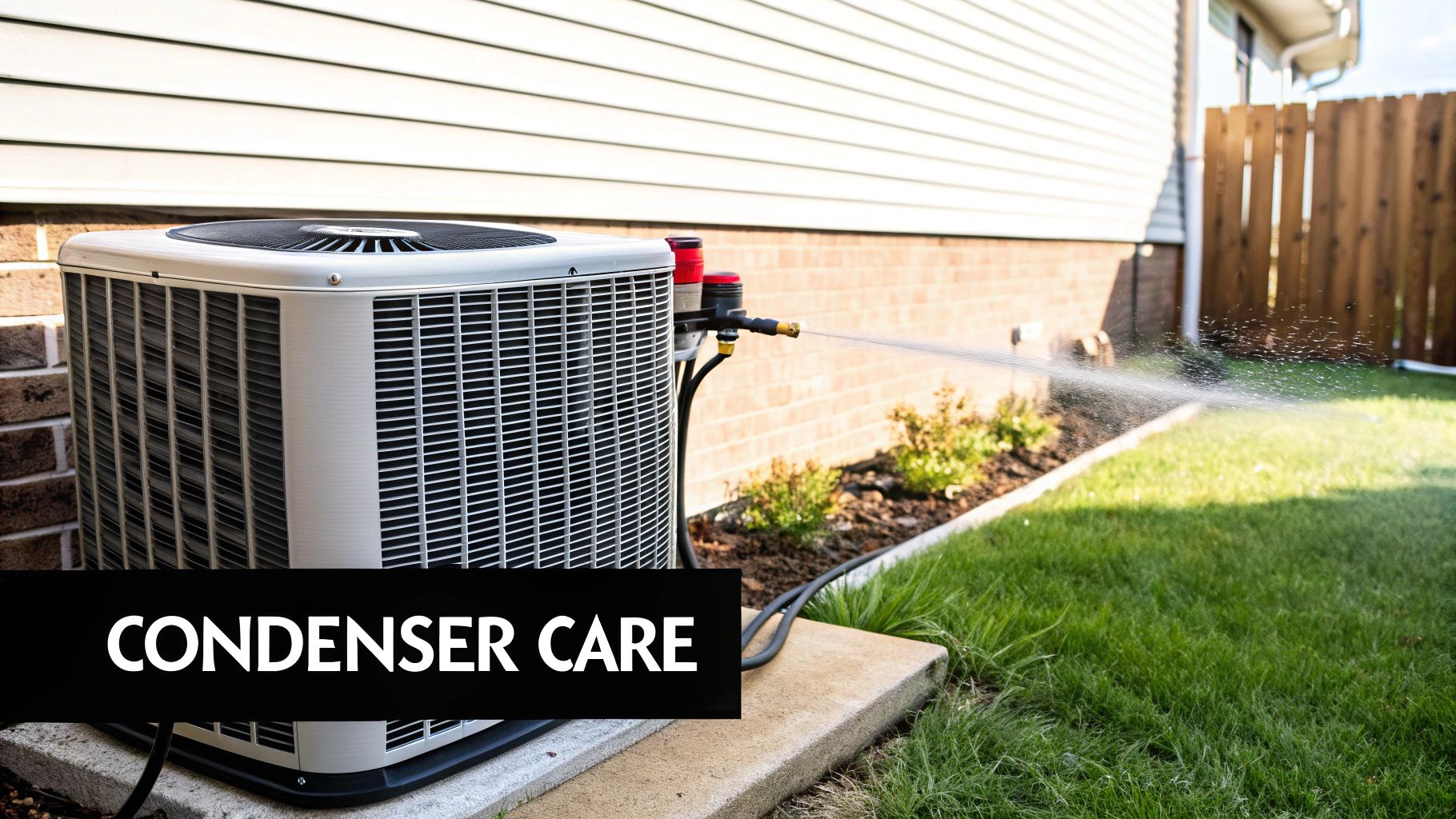
Alright, with the inside components taken care of, it’s time to head outside. Your outdoor condenser unit is the real workhorse of your A/C system, pumping all that heat out of your house. It’s a huge mistake to skip this part of your air conditioning system cleaning routine, as it can seriously drag down your system's performance.
Think about it: this unit sits outside year-round, getting bombarded with leaves, grass clippings, dust, and all sorts of gunk. When it gets clogged, it can't breathe. That means it can't get rid of heat efficiently, forcing your entire system to work harder and run longer just to keep you cool.
Create a Clear Zone for Airflow
Before you even think about spraying it down, take a look at the area around the unit. The condenser needs plenty of room to pull in air, so good airflow is absolutely non-negotiable.
Your first job is to clear out any debris that’s crowding it.
Rake away leaves, twigs, and grass clippings piled up at the base.
Trim back any bushes, shrubs, or weeds that have gotten a little too friendly.
Make sure there’s at least a two-foot bubble of clear space on all sides and above the unit.
This buffer zone is essential. It ensures nothing is blocking the air from being pulled into the condenser fins and shot out the top by the fan. It’s a simple step that pays big dividends in efficiency and prevents the motor from straining itself.
With the area clear, you can get to work on the unit itself. Just double-check that the power is off at both the circuit breaker and the outdoor disconnect switch. Safety first, always.
Gently Wash the Condenser Fins
Those thin aluminum fins you see wrapping around the condenser are engineered to create a massive surface area for heat to escape. But when they’re caked in dirt, they can't do their job. Cleaning them is pretty straightforward, but you have to be gentle.
If you're dealing with some seriously stubborn grime, you could look into ways of boosting your hose's cleaning power, but always start with a light touch.
The trick is to wash from the inside out. You’ll need to remove the top protective grille and fan assembly, just be careful with the wiring. Then, grab your garden hose with a spray nozzle and aim a gentle stream of water through the fins from the inside of the unit. This pushes all the dirt and debris outward, the same way it came in.
CRITICAL WARNING: Whatever you do, do not use a pressure washer on these coils. The force is way too much for the delicate aluminum fins. You’ll bend them flat in seconds, which can completely ruin the unit and land you with a hefty repair bill.
Straighten Bent Fins with a Fin Comb
While you’re cleaning, you’ll probably notice some fins are bent or smashed. This happens all the time from things like hail, flying debris from a lawnmower, or just an accidental bump. Bent fins block airflow just as badly as dirt does.
This is where a fin comb is your best friend. It’s a cheap little tool designed to slide between the fins and gently straighten them back into place. Carefully slide the comb in and pull it up in a smooth, steady motion. It takes some patience, but getting that airflow restored can make a surprising difference in how well your system performs.
Taking these few steps will ensure your outdoor unit can do its job properly, keeping your home cool without wasting energy. For a more detailed walkthrough, check out our easy DIY guide on cleaning condenser coils for more tips and visuals.
Understanding When to Call for Duct Cleaning
While keeping your indoor and outdoor AC units clean makes a huge difference, there's a major part of your HVAC system you can't see: the ductwork. Think of these hidden channels as the highways for all the conditioned air in your home. Their cleanliness, or lack thereof, has a direct impact on your indoor air quality.
But here’s the thing: unlike changing a filter or rinsing a coil, a full duct cleaning is almost never a DIY job.
There are definitely small tasks you can and should handle yourself. Regularly wiping down your vent covers and grilles with a damp cloth is a great start, as it stops that surface-level dust from getting blown back into the room. You can also use your vacuum's hose attachment to clean as far into the duct opening as you can reach.
These little habits are fantastic for routine upkeep. They just don't touch the deep-seated gunk that can build up over years inside the extensive network of ducts hidden in your walls, ceilings, and crawl spaces. Knowing when to call in a professional is the key to ensuring the air your family breathes is genuinely clean.
Signs You Need Professional Duct Cleaning
Sometimes, your home sends out clear signals that your ducts need more than a quick vacuuming. Ignoring these signs can lead to worsening air quality and even trigger health issues for your family. A professional air conditioning system cleaning that includes the ductwork is essential when you notice these specific problems.
You should seriously consider calling an expert if you experience any of the following:
Visible Mold Growth: If you spot mold around your vents or can see it inside the duct opening, that's a major red flag. This requires specialized equipment to remove safely without spreading spores throughout your home.
Persistent Musty Odors: Is there a stubborn, musty smell that seems to appear every time your AC or furnace kicks on? That often points directly to mold or mildew festering somewhere deep inside the ductwork.
Recent Pest Infestation: If you've had to deal with rodents or insects, chances are they've left behind nests and droppings in your ducts. You don't want those particles circulating through your air.
Excessive Dust: Do you feel like you're dusting constantly, only for a new layer to appear almost immediately? Your ducts might be the culprit, circulating an unusually heavy load of dust and debris.
Professional duct cleaning isn't just a more powerful vacuum. It involves high-velocity suction systems and rotary brushes designed to dislodge and safely remove contaminants. It’s a job that absolutely requires specific tools and training to be done right, without damaging your ductwork.
It's clear that homeowners are taking this seriously. The air duct cleaning market, valued at USD 3.89 billion, is projected to climb to USD 8.04 billion with a 6.82% growth rate. This boom is largely thanks to powerful vacuum systems, which make up about 36.5% of the industry's equipment. You can read the full research about these market trends on Zion Market Research.
DIY vs Professional Duct Cleaning: When to Make the Call
It can be tough to know where the line is between simple maintenance and a job for the pros. While routine cleaning of vents and registers is a great DIY task, deep cleaning requires specialized tools and expertise. This table breaks down what you can handle and when it's time to bring in an expert.
Cleaning Task | DIY Approach (What You Can Do) | Professional Service (When It's Needed) |
|---|---|---|
Vent Covers & Grilles | Wipe down with a damp cloth monthly. Use a vacuum brush attachment for stubborn dust. | Not typically needed unless covers are damaged or have heavy, caked-on buildup. |
Superficial Duct Dust | Use a vacuum hose to clean as far as you can reach into the duct opening from the vent. | When dust is excessive or returns immediately after cleaning, indicating a deeper issue. |
Mold & Mildew | Do not attempt. Trying to clean mold yourself can release spores into the air. | Any sign of visible mold or persistent musty odors requires professional remediation. |
Pest Debris | Do not attempt. Droppings and nesting materials can contain harmful bacteria. | After any known rodent or insect infestation to ensure all contaminants are safely removed. |
Deep Contaminants | Not accessible with household tools. | When a full system clean is needed to remove years of built-up dust, allergens, and debris. |
Ultimately, while your efforts at the vent openings are beneficial, they can't replace the comprehensive cleaning a professional service provides. For the deep-seated issues, calling an expert is the only way to ensure the job is done safely and effectively.
For some more easy maintenance tips, you can check out our guide on how to clean air ducts. Knowing your DIY limits is just as important as knowing what you can tackle yourself.
Your Top AC Cleaning Questions Answered
Even after walking through the steps, it’s natural to have a few questions. Homeowners I talk to are often curious about the timing, the cost, and whether a dirty AC really impacts their family’s health. Let's clear up some of the most common ones.
Getting these practical details sorted out is usually what makes the difference between planning to do maintenance and actually doing it. Knowing the facts helps you build a routine that fits your home, your budget, and your family.
How Often Should I Clean My Air Conditioning System?
There's no single magic number here. The right frequency really depends on which part of the system we're talking about and what your home life is like. It's better to think of it as a layered schedule, with some tasks happening monthly and others just once a year.
Here’s a good rule of thumb to follow:
Monthly Checks: The air filter is your first line of defense and needs the most frequent attention. You should be giving it a look every 30 days and swapping it out as soon as it looks dirty. If you have pets or anyone with allergies at home, you might even need to change it more often.
Seasonal Tune-Ups: Twice a year is perfect for a more thorough check-up, once before summer hits and again before winter. This is a great time to clear away leaves and debris from your outdoor unit and double-check that your condensate line is draining freely.
Annual Professional Cleaning: You should schedule a full, deep cleaning for your AC system once a year. This is where a pro comes in to safely clean the delicate evaporator and condenser coils, check refrigerant levels, and inspect all the electrical connections. These are critical tasks that go beyond what you can, or should, tackle on your own.
Your local environment plays a massive role. Here in Arizona, that fine desert dust clogs up filters in no time. A home with two golden retrievers will need far more frequent filter changes than a home without pets.
What Does Professional AC Cleaning Typically Cost?
The cost for a professional cleaning and tune-up can vary, but for a standard residential system, you should expect to invest somewhere between $100 and $400. If you see a deal that seems too good to be true, it probably is. Those super-low prices often lead to aggressive upselling or, worse, an incomplete job.
A quality, comprehensive service isn't just a quick rinse-down. It should always include several key actions to make sure you're getting real value for your money.
A reputable technician will always perform these steps:
Thorough Coil Cleaning: This means deep cleaning both the indoor evaporator coils and the outdoor condenser coils, not just one or the other.
Condensate System Flush: They'll clear out the drain line and clean the drain pan to prevent nasty clogs and potential water damage.
Electrical Inspection: They'll tighten all connections and check for wear and tear, which helps prevent unexpected system failures on the hottest day of the year.
Refrigerant Level Check: The technician will verify that the system has the correct refrigerant charge. If it's low, that points to a leak and means your system isn't running efficiently.
Full System Test: Finally, they'll run your AC through a complete cycle to confirm everything is operating exactly as it should be.
This transparent approach ensures you know exactly what you’re paying for. It turns the service into a smart investment in your home’s comfort and your system's longevity, not just another bill.
Can a Dirty Air Conditioner Make My Family Sick?
Absolutely. In fact, this is one of the most important reasons to stay on top of regular cleaning. Think of your HVAC system as the lungs of your home; if it's dirty, it's breathing contaminated air into every single room.
The dark, damp environment inside your indoor unit is a perfect breeding ground for mold, mildew, and bacteria. Every time the AC kicks on, it can blast these microscopic spores straight into the air you and your family breathe.
This can trigger a whole host of health issues, especially for the most vulnerable members of your household.
For Allergy Sufferers: A dirty system is like a super-spreader for dust, pollen, and pet dander. It can trigger non-stop allergy symptoms like sneezing, itchy eyes, and a stuffy nose.
For Those with Asthma: Mold spores are a major asthma trigger. Circulating them through the air can lead to more frequent and much more severe asthma attacks.
For Everyone Else: Even if you don't have pre-existing conditions, breathing in poor-quality air can lead to headaches, fatigue, and general irritation of the eyes, nose, and throat.
Keeping your system clean isn't just about performance or efficiency. It's a fundamental part of maintaining a healthy home for the people you care about most.
A clean AC system is the foundation of a comfortable and healthy home. If you're ready to ensure your system is running at its absolute best, trust the certified experts at Covenant Aire Solutions. We provide honest, thorough, and reliable HVAC services across Tucson. Schedule your professional cleaning today by visiting us at https://www.covenantairesolutions.com.