
How Often Should a Heat Pump Be Serviced in 2026
A heat pump should be professionally serviced at least once a year, and twice a year in spring and fall when it both heats and cools. Between those visits, check the filter monthly and give it extra attention after heavy dust.
The useful distinction isn't annual versus seasonal service. It's the difference between a technician testing the equipment and a homeowner keeping air moving through it. In Tucson, a tidy service calendar won't protect a system that's breathing through a dust-packed filter.
How Often a Heat Pump Should Be Serviced
At least one professional service visit each year is a practical baseline. For a heat pump that heats and cools your home year-round, schedule checks in both spring and fall. A calendar reminder helps, but the system's workload and the dust around it matter too.
Situation | Professional visits | Best timing | Filter care |
|---|---|---|---|
Moderate use, one heavy season | At least once a year | Before the heavier season | Check monthly; clean or replace when dirty |
Year-round heating and cooling | Twice a year | Spring and fall | Check monthly |
Ducted system, typical dust | At least once a year | Spring, or before peak use | Clean or replace about every 90 days |
Ductless indoor unit | At least once a year | Before peak season | Clean at least monthly or when visibly dirty |
Pets, heavy dust, or monsoon exposure | Twice a year | Spring and fall, plus inspect after severe dust | More often than the normal filter interval |
Older or high-runtime equipment | Twice a year | Spring and fall | Monthly, sooner if airflow drops |
Filter timing depends on the type of system. A ducted system's filter may need cleaning or replacement about every 90 days, while ductless indoor-unit filters need cleaning at least monthly or when visibly dirty. Pets and heavy dust can mean checking more often. These are filter-care intervals, not substitutes for professional service.
Choose the row by workload
A guest room used occasionally puts less demand on a heat pump than a home occupied throughout the year. Older equipment or a system that runs for long stretches during hot weather may also need closer attention.
After a dust storm, check the accessible filter and look for visible buildup around the outdoor unit. One dusty day does not automatically call for an extra service appointment. Arrange professional attention if airflow is blocked, contamination persists, or the system develops operating problems.
A technician checks how the equipment operates and inspects components such as controls, electrical connections, coils, airflow, refrigerant-related performance, and condensate drainage. Changing or cleaning a filter is a separate, simpler task that homeowners can track between appointments.
Put the schedule somewhere useful
Keep the model information, filter size, service records, and next appointment together. A preventive maintenance schedule can spell out which tasks belong to the homeowner and which require a technician.
In Tucson, a heat pump may run hard through summer and continue working for winter comfort. Set reminders before those busy periods, then adjust filter checks to match the dust and runtime in your home.
Practical rule: Follow a shorter manufacturer or warranty interval when required. Treat one yearly professional visit as the floor for light use, not a reason to wait if a hard-working system needs attention sooner.
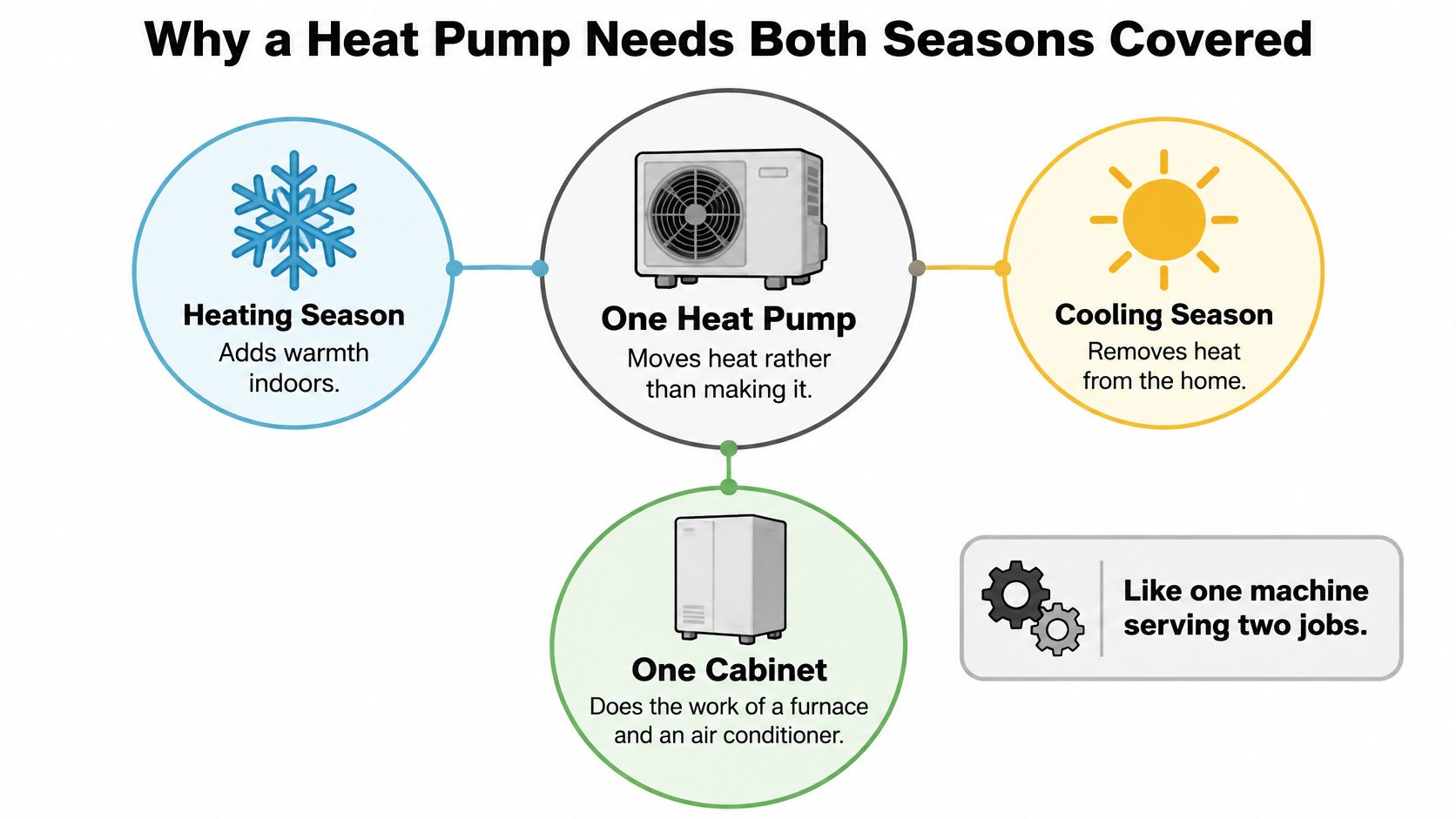
Why a Heat Pump Needs Both Seasons Covered
A heat pump is like a truck that hauls cargo all winter, then works as a refrigerated delivery van all summer. The vehicle hasn't changed, but the job has. Checking it for summer deliveries doesn't establish that everything needed for winter work still functions.
A heat pump moves heat rather than making it through combustion. The same equipment provides cooling and heating, using shared components in different operating modes.
The seasonal handoff changes what needs testing
In cooling mode, the system absorbs heat indoors and rejects it outside. In heating mode, refrigerant flow reverses so the system can bring heat indoors.
The reversing valve makes that change possible. Defrost controls help manage frost on the outdoor coil during heating, while supplemental heat, where installed, supports the system under appropriate conditions.
A cooling-only inspection can leave those heating functions untested. A comfortable house during summer doesn't prove that the reversing valve, defrost control, and backup heat will respond properly when cold nights arrive.
The ENERGY STAR heating and cooling guidance recommends annual pre-season checkups, with cooling checked in spring and heating checked in fall. For equipment that performs both jobs, those seasonal checks cover different operating demands.
The diagram shows why the same cabinet needs attention for different jobs.
Tucson cooling hours still leave a winter job
Long cooling seasons put substantial demand on the compressor and fans. When chilly nights return, that same equipment must change roles without a lengthy rest or a separate heating system taking over.
Say your home stays comfortable through summer, but the thermostat calls for heating on a cold morning and delivers cool air. The cooling performance wasn't necessarily misleading. It didn't test everything needed for heating.
Understanding how heat pumps work in winter also helps distinguish normal operating changes from problems that deserve attention. A temporary defrost event isn't the same as persistent ice or a home that won't warm up.
The spring-and-fall schedule exists because the machine changes jobs, not because a fuller calendar is inherently better.
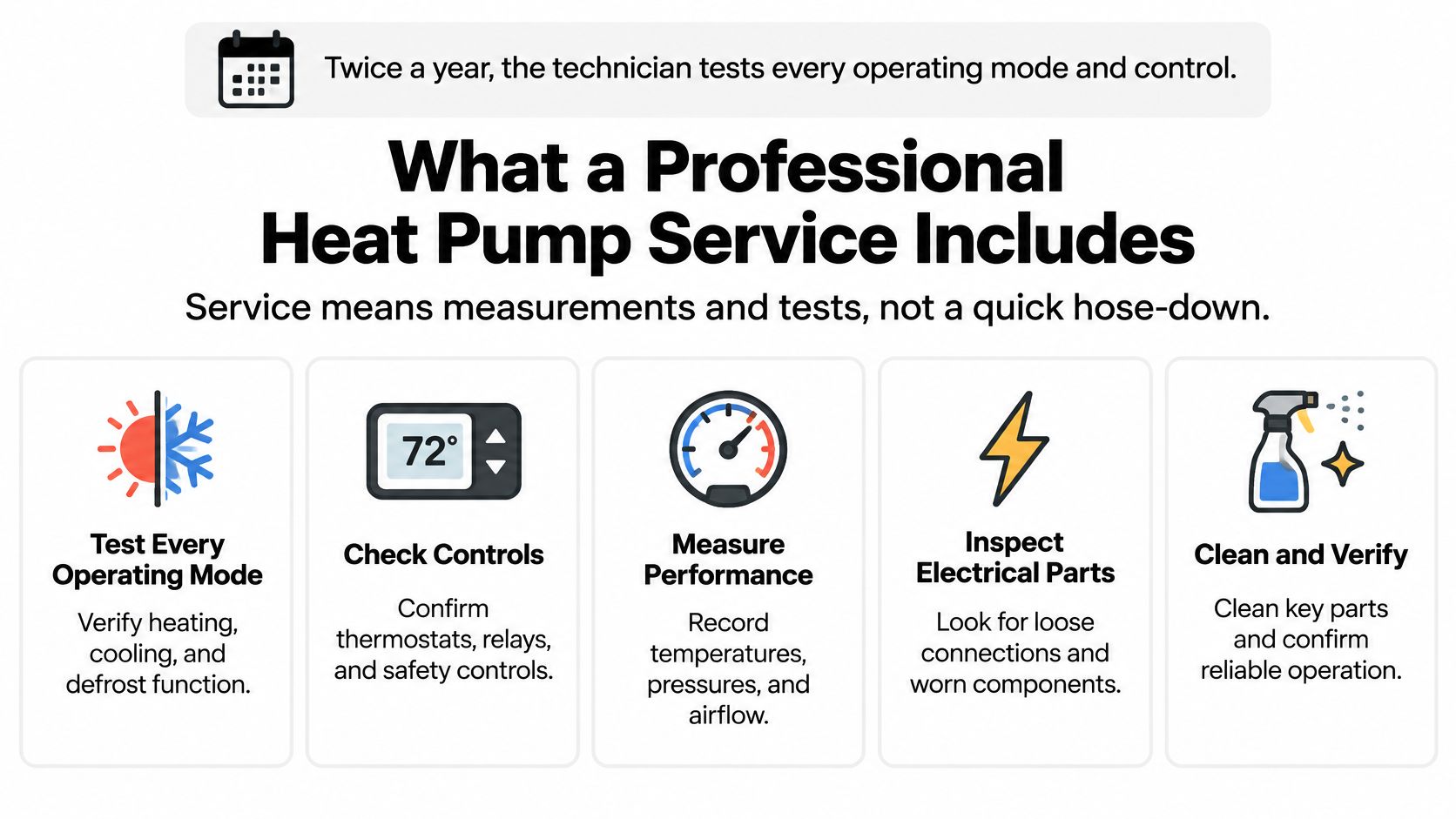
What a Professional Heat Pump Service Includes
Service means measurements and functional tests, not just removing dust from a cabinet. The federal preventive-maintenance training document separates semiannual operating and leak-indication checks from annual airflow, cleaning, and condensate-pump tasks.
Professional heat pump checks by interval
Check | Interval | What it confirms |
|---|---|---|
All operating modes and controls | Twice a year | Heating, cooling, and controls actually change over |
Oil at lines, joints, components, and coils | Twice a year | Visible evidence that may indicate escaping refrigerant oil |
Reversing-valve operation, documented | Twice a year | The system can switch between heating and cooling |
Airflow versus manufacturer temperature split or static pressure | Once a year | Airflow performance matches the manufacturer's target |
Coils and blower cleaned when airflow is off target | Once a year, with cleaning when needed | Fouling isn't preventing proper heat transfer |
Condensate pump cleaned, flushed, and tested | Once a year | Water can leave the system instead of backing up |
These are technician tasks. Homeowners shouldn't open electrical compartments or refrigerant lines to reproduce them.
Why airflow comes before assumptions
A dirty indoor coil or a struggling blower can produce temperatures and pressures that resemble a refrigerant problem. If the technician doesn't evaluate airflow, adding refrigerant can leave the actual restriction untouched and create another problem.
Static pressure helps reveal resistance in the air path. Temperature measurements, interpreted under the right operating conditions, help assess whether the system is transferring heat as expected.
A complete inspection also considers electrical terminals, damaged insulation, blocked condensate drainage, and unnecessary supplemental-heat operation. Cleaning should address a finding, not substitute for finding out how the equipment performs.
This checklist illustrates the difference between a rinse and a functional service.
Leave with a useful record
Your service record should identify the modes tested, the airflow result against the applicable target, and any leak or drainage findings. It should also distinguish completed work from recommended repairs.
Our explanation of how long HVAC maintenance takes can help you plan access to the equipment. The useful outcome, however, is documented condition and performance, not merely time spent on site.
For older residential heat pumps manufactured before 2010 that use HCFC-22, the EPA's refrigerant servicing guidance says continued service is permitted and advises using refrigerant-certified technicians; Section 608 of the Clean Air Act governs refrigerant handling and requires minimizing releases of ozone-depleting chemicals. Leaks increase operating and maintenance costs, while routine servicing helps reduce environmental impacts.
A filter change remains necessary, but it doesn't establish that mode switching, airflow, electrical operation, or drainage is sound. Those require the testing behind a professional visit.
Between-Visit Care and When Dust and Runtime Shorten the Interval
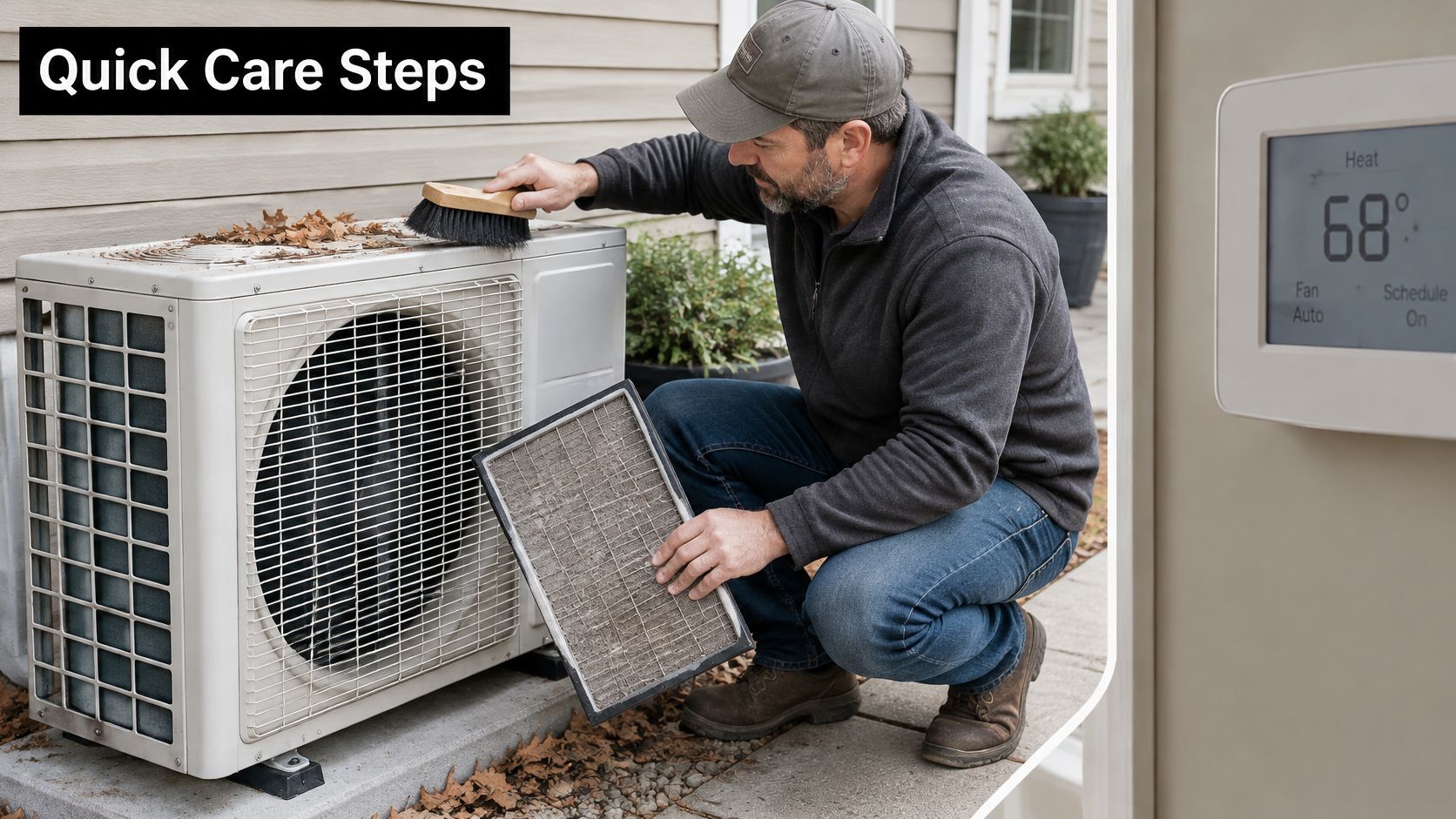
Inspect the filter monthly. With the system off, slide the filter out and inspect its surface. Packed pleats, visible dust mats, and reduced light through the material are reasons to act, although light alone isn't a reliable test for every filter design. Replace a disposable filter; wash only a filter identified as reusable, and let it dry completely before reinstalling it.
Repeat the check after unusual dust. A dust storm, sanding project, or heavy shedding can load a filter ahead of its usual schedule. Don't wait for a reminder when the conditions have clearly changed.
Clear the outdoor unit. Keep at least two feet of working clearance around its sides, unless the manufacturer requires more, and preserve the specified overhead clearance. With power off, remove loose leaves, seed pods, and monsoon debris without pushing material into the coil or bending fins.
Watch the cooling drain. During sustained cooling, look for drainage where the system normally discharges condensate and check that the pan isn't overflowing. Dry Tucson air can produce little water, so an absent drip alone doesn't prove a blockage.
Listen and watch during operation. Short cycling, grinding, and persistent failure to reach the setpoint deserve attention. Note whether the symptom occurs during startup, cooling, heating, or shutdown.
Document trouble safely. Photograph visible ice, note weak airflow, or record a tripped breaker without removing covers. Call for service instead of repeatedly resetting a breaker or trying to force an iced system to keep running.
The accessible filter and outdoor cabinet are the right places to start, not the sealed electrical or refrigerant components.
Why a loaded filter matters
As a filter collects particles, it increases resistance to airflow. Less air crosses the indoor coil, so the system transfers heat less effectively and may develop abnormal operating temperatures or pressures. The equipment may run longer, use more energy, and experience additional stress without delivering the comfort you expect.
Keep return grilles and supply registers unobstructed, too. A clean filter can't compensate for a return hidden behind furniture or an air path restricted elsewhere.
For choosing the right replacement routine, use our guide to air filter replacement frequency. Match the filter dimensions and equipment requirements rather than automatically buying the most restrictive filter on the shelf.
Homeowner care stops before refrigerant adjustments, electrical diagnosis, and safety-control changes. Don't add refrigerant, bypass a float switch, or defeat a protective shutdown to keep the system running.
Let dirt and workload shorten the interval
The federal operations and maintenance guide describes maintenance intervals ranging from one to six months according to dirt loading. That range concerns condition-sensitive maintenance tasks, not a blanket requirement to purchase a complete professional tune-up at every interval.
Tucson's fine dust and storm debris make inspection after severe weather sensible. There isn't a universally validated Tucson-specific schedule that accounts for every yard, filter, building envelope, and operating pattern.
Pets and renovation work can increase indoor particle loading. A closed-up house can still circulate pet hair and indoor dust, although being closed by itself doesn't prove the filter needs earlier replacement.
Runtime matters alongside contamination. A system serving a small commercial suite through long occupied hours may need attention sooner than equipment in an occasionally occupied room, even when both were serviced at the same time.
The following video offers another view of heat pump maintenance.
Match the response to the property
A lightly used guest casita can remain on the baseline schedule if the manufacturer permits it and inspections show clean components and sound operation. Low use doesn't eliminate the need to look for nests, debris, deterioration, or drainage problems.
A snowbird home benefits from a pre-arrival check rather than discovering problems after luggage is inside. A dry condensate trap, where the design uses one, or a filter left dirty before departure can cause trouble when cooling resumes.
Equipment with recurring comfort complaints needs assessment when the symptom appears. Repeatedly moving the thermostat lower won't correct a dirty blower, duct restriction, or control problem.
A perfect annual appointment can't compensate for a filter nobody looked at during the hottest part of summer.
Use a simple decision rule: maintain the filter reminder, add inspections after severe dust, and shorten professional intervals when contamination, runtime, or recurring symptoms show that the baseline isn't enough. If you're already on a seasonal schedule and problems continue, ask for diagnosis rather than assuming more identical cleaning visits will solve them.
Efficiency Lifespan and Warranty Payoffs
Maintenance helps the equipment deliver the capacity it was installed to provide. Clear coils, suitable airflow, and verified refrigerant-related performance reduce the chance that the system will struggle through peak demand with an unresolved fault.
That isn't a promise of a particular energy saving or equipment lifespan. Installation quality, equipment condition, building heat gain, and operating habits also affect the result.
Compare the work, not just the price
Published heat pump tune-up price ranges
Source | Visits assumed | Published cost |
|---|---|---|
Twice a year, spring and fall | About $70 to $200 per visit | |
Once a year, ideally in spring | About $75 to $200 per tune-up | |
Two visits for year-round use | About $100 to $250 total per year |
These published consumer ranges aren't Tucson quotes, and the annual totals aren't interchangeable with per-visit charges. A visual inspection and a visit that measures airflow, tests modes, and investigates findings aren't necessarily the same purchase.
Before approving service, establish what's included and how additional repairs are authorized. Skipping maintenance doesn't necessarily save the whole service cost if an unresolved problem later requires an emergency call or contributes to component damage.
Keep the paperwork and address the building
Warranty requirements come from your actual documents, not a universal rule. Missing required maintenance or lacking records can complicate a claim, but don't assume every missed appointment automatically cancels all coverage.
Keep invoices that identify:
Service date and equipment: Make it clear which system received attention.
Tests and findings: Retain mode tests, measurements, and repair recommendations.
Work decisions: Record completed repairs and anything declined or deferred.
Equipment care also can't seal a drafty opening. Black Badge Doors' resource on sliding door insulation and comfort is useful when the room near a patio door stays uncomfortable despite properly operating HVAC equipment.
For longer-term planning, our guide to heat pump life expectancy and longevity explains how maintenance fits alongside operating conditions and equipment care. Avoid treating service as a guarantee against failure.
The money buys a better chance of avoiding peak-season breakdowns and a clear record that the system was cared for.
Schedule Heat Pump Care with Covenant Aire
For Tucson homeowners asking how often should a heat pump be serviced, the practical choice is a schedule matched to actual use. A home relying on the same equipment for heating and cooling benefits from spring and fall appointments, with filter care continuing between them.
Light use can justify the baseline when the manual permits it and the equipment remains in good condition. Symptoms change that decision immediately, regardless of the next scheduled appointment.
Make seasonal care a standing arrangement
At Covenant Aire Solutions, we offer heat pump repair, maintenance, and replacement for residential and commercial equipment in Tucson and surrounding areas. Our Covenant Comfort Maintenance Plan provides biannual preventive care, with two visits per year, one in spring and one in fall.
The plan includes:
Seasonal inspection and cleaning: A 21-point inspection, 2 free system check-ups per year, and free condenser coil cleans.
Priority access: Free 24/7 priority service and no trip charges or fees for initial travel time.
Repair and replacement discounts: 20% off repair labor rates, 20% off replacement parts, and 10% off new unit purchases.
Transfer flexibility: Free program transfers.
That arrangement suits equipment that changes jobs with the seasons. It also makes planned care easier to maintain instead of leaving every appointment until something feels wrong.
Act before peak demand
Schedule spring service before cooling demand peaks, and reserve fall service before heating nights return. Keep the filter reminder active between appointments, including while preparing a seasonal home for arrival or departure.
If you already have weak airflow, persistent ice, unusual noises, or a unit that can't hold the setpoint, don't wait for the next planned month. The schedule establishes a routine; a failing system still needs attention when it fails.
Covenant Aire Solutions offers heat pump maintenance, repair, and replacement to help Tucson-area homes and businesses stay ready for both seasons. Visit Covenant Aire Solutions to arrange service or call to enroll in a maintenance plan that keeps seasonal checks on the calendar.